Writing Prompts for Students: Daily Journal Ideas, Creative Prompts, and Teacher-Friendly Activities
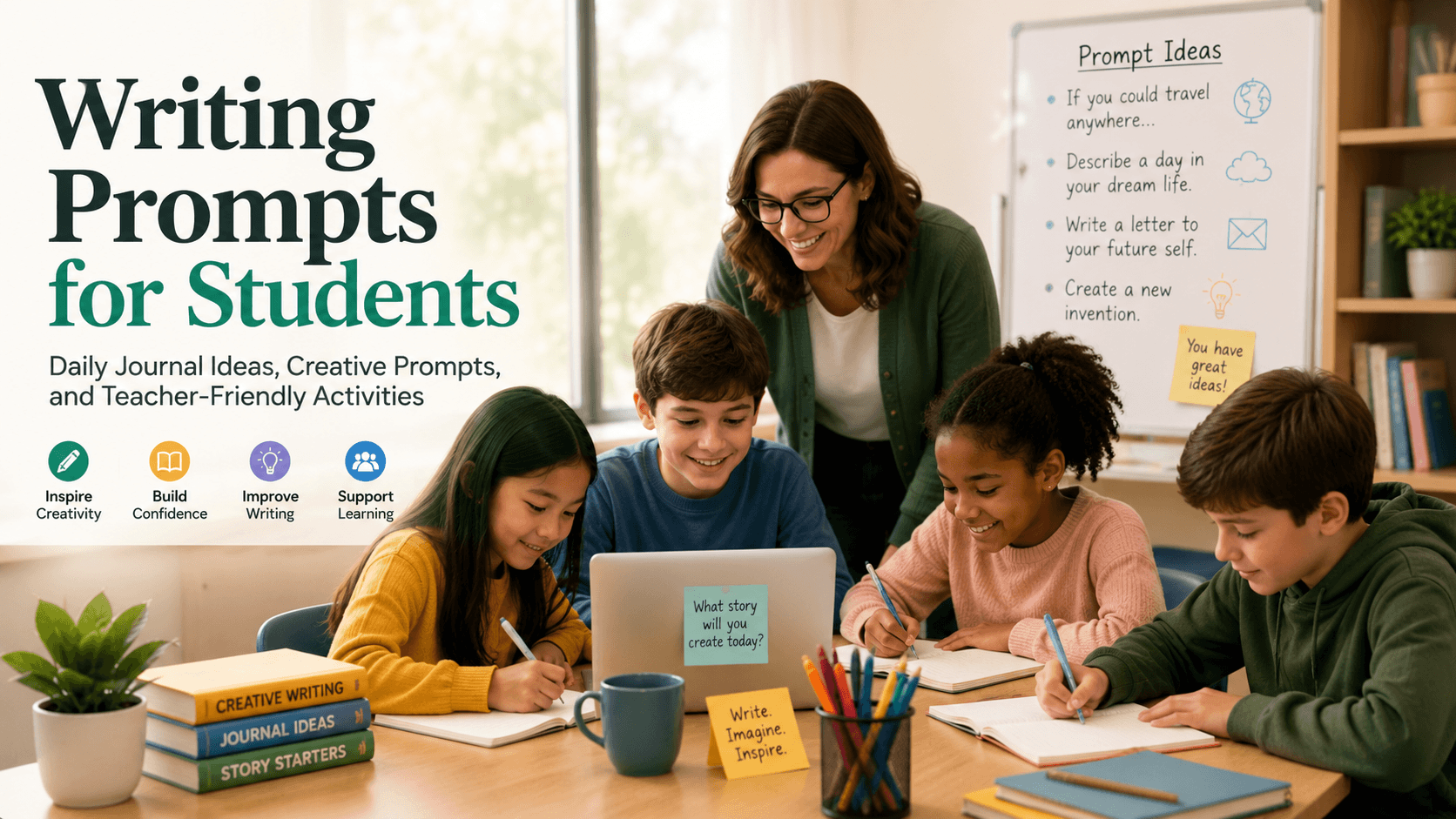
Writing prompts for students help build confidence, improve fluency, and make writing feel easier. They give learners a clear starting point, whether they are working on journal prompts, creative writing prompts, reflective writing prompts, or daily writing practice. A strong prompt can turn a blank page into a full idea in seconds.
This guide brings together the most useful types of prompts for students, teachers, parents, and young writers. It includes journal prompts for kids, writing prompts for middle school, journal prompts for teens, picture writing prompts, and creative ideas for daily use. It also helps teachers use prompts in class more effectively.
Table of Contents
- Why Writing Prompts Matter
- Best Types of Writing Prompts
- 1. Journal Prompts for Students
- 2. Creative Writing Prompts for Students
- 3. Morning Journal Prompts for Students
- 4. Reflective Writing Prompts for Students
- 5. Picture Writing Prompts
- Prompts by Age Group
- Writing Prompts for Kids
- 3rd Grade Writing Prompts
- Writing Prompts for Middle School
- Journal Prompts for High School
- Fun and Seasonal Prompt Ideas
- Prompt Ideas for Teachers
- How to Use Prompts Effectively
- Strong Keyword Fit
- Closing Section
Why Writing Prompts Matter
Writing prompts give students structure. They reduce pressure, spark ideas, and help learners write more often.
They are useful for:
Building writing confidence.
Improving vocabulary and sentence structure.
Supporting daily journal habits.
Helping students think critically.
Encouraging creativity in a simple way.
Teachers also use prompts to save time and keep lessons active. Parents use them to support writing at home. Students use them to practice self-expression, reflection, and storytelling.
Best Types of Writing Prompts
Different students need different prompt styles. Some need fun journal prompts for students, while others need opinion writing prompts or narrative writing prompts. The best prompt depends on age, skill level, and purpose.
1. Journal Prompts for Students
Journal prompts for students work well for daily reflection and personal writing. They help students express thoughts clearly and build a writing routine.
Examples:
What made you smile today?
What is one goal you want to reach this week?
What lesson did you learn from a mistake?
2. Creative Writing Prompts for Students
Creative writing prompts for students help build imagination and storytelling skills. These are ideal for warm-ups, class activities, and homework.
Examples:
You found a door in your school that was never there before. What happens next?
Write a story about a pet that can talk.
Describe a world where rain falls in colors.
3. Morning Journal Prompts for Students
Morning journal prompts for students work well as a daily classroom starter. They help students settle in and begin thinking before lessons start.
Examples:
What is one thing you want to do well today?
What is one challenge you expect this week?
What does a successful day look like for you?
4. Reflective Writing Prompts for Students
Reflective writing prompts for students encourage deeper thinking. They are useful for personal growth, class discussion, and emotional awareness.
Examples:
What is something you handled better than before?
What habit would improve your life if you changed it?
What does success mean to you?
5. Picture Writing Prompts
Picture writing prompts are powerful because they give students a visual starting point. Teachers often use picture writing prompts for kids, picture writing prompts for elementary students, and picture writing prompts for middle school.
Examples:
Look at the image and describe what is happening.
Write a story about the moment before the picture was taken.
Imagine the people in the picture are hiding a secret.
Prompts by Age Group
Students need age-appropriate ideas. That is why writing prompts for kids, journal prompts for kids, and writing prompts for middle school should feel different from prompts for high school students.
Writing Prompts for Kids
Writing prompts for kids should be simple, fun, and easy to understand.
Examples:
What would you do if your teddy bear could talk?
If you could fly for one day, where would you go?
What is your favorite thing to do after school?
3rd Grade Writing Prompts
3rd grade writing prompts should use short instructions and familiar topics. This helps young learners stay focused and complete their work.
Examples:
Write about your best birthday.
Describe your favorite animal.
What would you do if you found a treasure box?
Writing Prompts for Middle School
Writing prompts for middle school can be more thoughtful and slightly more detailed. Students at this level can handle opinion, narrative, and reflective writing.
Examples:
Should students have more choice in what they learn?
What does true friendship mean?
Describe a moment that changed your opinion about something.
Journal Prompts for High School
Journal prompts for students high school level should encourage deeper analysis and stronger personal reflection.
Examples:
What does success mean at your age?
How do you handle pressure from school or society?
What skill do you want to develop before graduation?
Fun and Seasonal Prompt Ideas
Fun writing prompts keep students engaged. They work especially well when you want more participation and less hesitation.
Examples:
Fun journal prompts for students: What would happen if homework disappeared forever?
Funny picture writing prompts for kids: Describe a cat trying to become a teacher.
Halloween writing prompts for kids: You open a haunted candy shop. What happens next?
December daily prompts: What is your favorite winter memory?
Daily prompts for journaling: What made today different from yesterday?
Seasonal prompts make writing feel fresh and timely. They are also easy to reuse for weekly or monthly classroom plans.
Prompt Ideas for Teachers
Teachers often search for ai prompts for teachers and chatgpt prompts for teachers to save time while planning lessons. The same applies to chat gpt prompts for teachers, especially when building writing activities quickly.
Useful teacher prompt ideas include:
Create 10 journal prompts for middle school.
Write 20 creative writing prompts for kids.
Make 5 picture writing prompts for elementary students.
Generate reflective writing prompts for teens.
Build daily journal prompts for a one-week classroom warm-up.
Teachers can also combine prompts with rubrics, word banks, or sentence starters to support struggling writers.
How to Use Prompts Effectively
The best writing prompts for students are simple, clear, and easy to answer. A good prompt should not feel confusing or too long.
Use these tips:
Keep instructions short.
Match the prompt to the student’s age.
Offer a time limit, such as 5 or 10 minutes.
Encourage full sentences.
Add choice when possible.
Use prompts daily to build routine.
Students write better when they feel safe, supported, and free to express ideas without pressure.
Strong Keyword Fit
This article naturally supports search intent around:
writing prompts for students.
journal prompts for students.
creative writing prompts for students.
morning journal prompts for students.
reflective writing prompts for students.
picture writing prompts for kids.
journal prompts for middle school.
daily writing prompts for students.
fun journal prompts for students.
chatgpt prompts for teachers.
It also supports broader terms like writing prompts generator, opinion writing prompts, narrative writing prompts, fantasy writing prompts, journal prompts for mental health, and daily journal prompts.
Closing Section
Writing prompts work because they make writing easier to start and easier to continue. When students get the right prompt at the right time, they write more, think more, and improve faster. That is why good prompts remain one of the simplest and most effective tools for classrooms, homes, and independent writers.