125+ Writing Prompts for Kids: Spark Creativity and Build Writing Skills
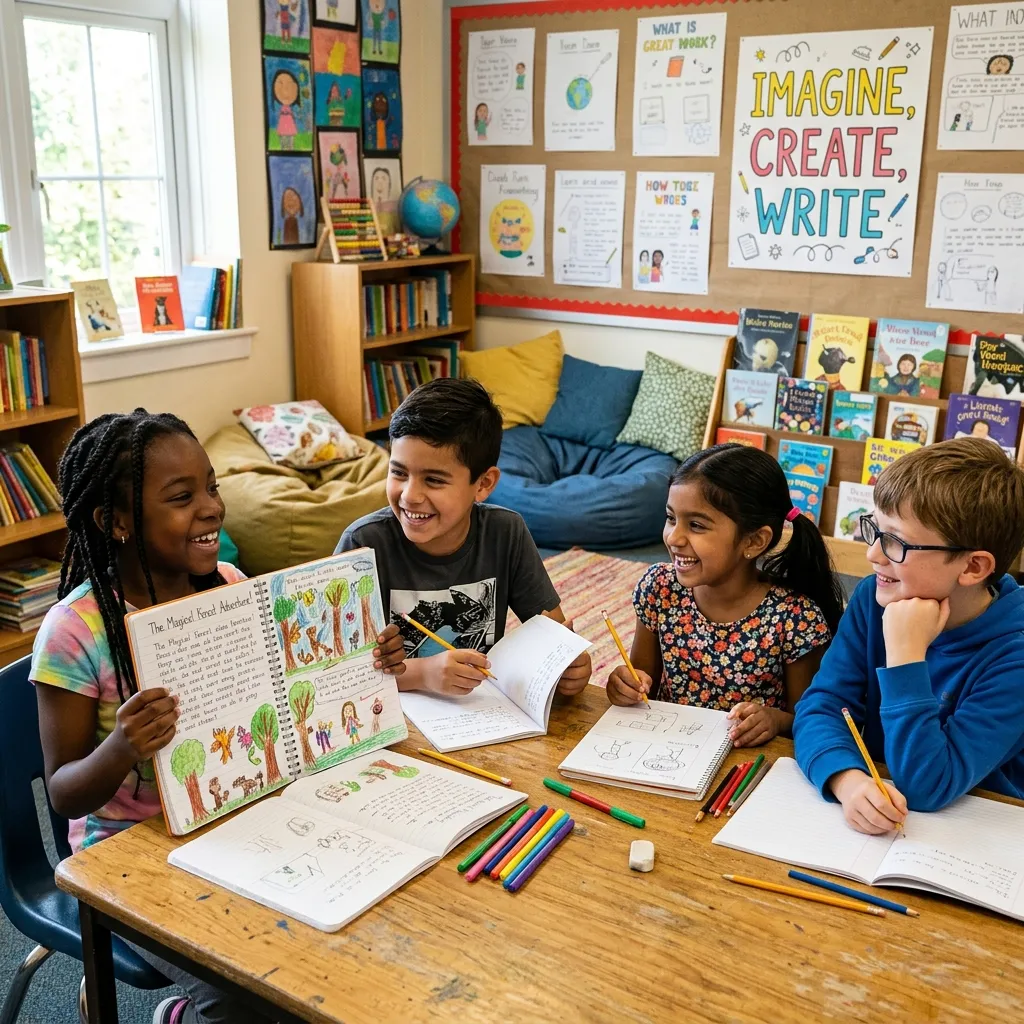
125+ Writing Prompts for Kids: The Ultimate Guide to Spark Creativity and Build Confident Writers
Introduction
Every parent and teacher knows that heartbreaking moment. You hand a child a blank piece of paper and a pencil, expecting creativity to flow, and instead you get... nothing. The pencil hovers. The shoulders slump. And then comes the phrase that strikes fear into every educator's heart: "I don't know what to write about."
If you've ever faced that moment, take a deep breath. You're not alone, and more importantly, the child sitting in front of you isn't broken or "bad at writing." They just need a spark.
That spark is exactly what writing prompts provide.
Writing prompts for kids aren't just fill-in-the-blank exercises or boring school assignments. When used well, they're invitations to adventure. They're doorways into imaginary worlds where anything can happen. They're confidence builders that transform "I can't write" into "Look what I made!"
In this comprehensive guide, we're going to explore everything you need to know about using writing prompts with children. We'll cover why prompts work (backed by educational research), how to choose age-appropriate prompts, over 125 specific prompt ideas organized by category, practical tips for making writing time the best part of a child's day, and answers to the most common questions parents and teachers ask.
Whether you're a parent homeschooling your elementary-aged children, a classroom teacher looking for fresh morning work ideas, a tutor helping a reluctant writer, or anyone who wants to nurture a child's creativity, you'll find practical, actionable strategies here.
We'll also explore the difference between boring prompts that kill creativity and engaging prompts that unlock it. We'll talk about how to adapt prompts for different ages, learning styles, and interests. And we'll address the elephant in the room: how do you balance giving children structure (which many need) with the freedom to truly express themselves?
By the time you finish this guide, you won't just have a massive list of prompts at your fingertips. You'll understand the art and science of using prompts to build not just writing skills, but confidence, creativity, and a lifelong love of self-expression.
So grab a pencil (or a laptop, if that's your child's preference), and let's dive into the colorful, imaginative world of writing prompts for kids. The adventure starts now.
Table of Contents
- Why Writing Prompts Matter: The Research and the Reality
- The Science Behind Writing Prompts and Child Development
- The Confidence Factor: How Prompts Reduce Writing Anxiety
- Choosing the Right Writing Prompts for Different Ages and Stages
- Ages 5-7 (Kindergarten - 1st Grade)
- Ages 7-9 (2nd Grade - 3rd Grade)
- Ages 9-12 (4th Grade - 6th Grade)
- 125+ Writing Prompts for Kids: Organized by Category
- Imaginative and Fantasy Prompts (Perfect for creative writing prompts for kids)
- Everyday Life and Feelings Prompts (Great for journal prompts for kids)
- Mystery and Adventure Prompts (Ideal for story writing prompts for kids)
- Seasonal and Holiday Prompts (Fun writing prompts for kids)
- School and Friendship Prompts (Relatable elementary writing prompts)
- Animal and Nature Prompts (Engaging writing ideas for kids)
- Time Travel and History Prompts (Educational writing activities for kids)
- Picture Writing Prompts for Kids (Visual inspiration)
- "What If" Prompts (Sparking imagination with fun writing prompts for kids)
- Persuasive and Opinion Writing Prompts (Building critical thinking)
- Poetry and Sensory Prompts (Expanding writing activities for kids)
- Advanced Prompts for Kids Who Love Writing (Challenging kids writing exercises)
- Daily Writing Prompts for Kids (Quick writes for morning work or journals)
- Practical Tips for Using Writing Prompts with Kids
- Create a Writing-Friendly Environment
- Adapt Prompts for Reluctant Writers
- Balance Structure and Creativity
- Common Mistakes When Using Writing Prompts (And How to Avoid Them)
- Mistake 1: Over-Correcting
- Mistake 2: Using Writing as Punishment
- Mistake 3: Only Assigning Prompts That Are "Educational"
- Mistake 4: Not Providing Enough Support
- The Benefits of Regular Creative Writing: What the Research Shows
- Academic Benefits That Go Beyond Language Arts
- Social-Emotional Benefits: The Hidden Superpower of Writing
- The Long-Term Impact: Writing as a Life Skill
- Frequently Asked Questions About Writing Prompts for Kids
- Conclusion: Every Child Is a Writer (Yes, Every Single One)
- Call to Action
Why Writing Prompts Matter: The Research and the Reality
The Science Behind Writing Prompts and Child Development
Here's something that might surprise you: writing prompts aren't just about producing better writers. They're about developing brains.
When a child responds to a well-crafted writing prompt, multiple areas of their brain light up simultaneously. The language centers activate as they search for words. The visual processing areas engage as they imagine scenes. The executive function regions kick in as they organize thoughts into sequences. And the emotional centers respond as they connect with characters and ideas.
Educational researchers have studied the impact of regular creative writing on child development for decades, and the findings are consistent:
Children who write creatively on a regular basis show improved reading comprehension. The act of constructing sentences helps them understand how sentences work when they encounter them as readers. It's the "builder's knowledge" principle—if you've built a house (or in this case, a paragraph), you understand how houses paragraphs are constructed.
Creative writing also builds vocabulary in a way that memorizing word lists never can. When a child needs the perfect word to describe how their dragon character feels when it loses its fire-breathing ability, they'll actively seek that word. And because they're emotionally invested in finding it, they'll remember it.
But perhaps most importantly, writing prompts give children agency. In a world where they're told what to do from morning until night—wake up, get dressed, eat this, go there, sit here, do this assignment—writing prompts offer genuine choice. Even within the structure of a prompt, children decide what happens, who the characters are, how the story ends. That autonomy matters enormously for motivation and engagement.
The Confidence Factor: How Prompts Reduce Writing Anxiety
If you work with children, you've probably noticed that writing anxiety is real, and it starts early. By third or fourth grade, many children have internalized the idea that they're "not good writers." They've compared their messy first drafts to the polished published books they read, and they've decided they can't measure up.
Writing prompts help break this cycle in several ways.
First, prompts lower the stakes. When a child knows they're just "playing" with an idea, not producing a masterpiece, they're more willing to take risks. A prompt like "What if your pet could talk for one day?" feels like fun, not work. And when children are having fun, they're learning without even realizing it.
Second, prompts provide structure for children who feel overwhelmed by blank pages. The prompt gives them a starting point, so they don't have to generate everything from nothing. This is especially important for children with learning differences like dyslexia or ADHD, who might have brilliant ideas but struggle to organize them.
Third, prompts create a sense of accomplishment. When a child completes a prompt-driven writing piece, they have a finished product. Not a rough draft that needs three more revisions, but a complete thought, a full story, a real piece of writing they can be proud of. Those feelings of success build confidence for the next writing session.
Related: Creative Writing Prompts for Elementary Students
Choosing the Right Writing Prompts for Different Ages and Stages
Not all writing prompts work for all children. A prompt that delights a kindergartner might bore a fifth grader, while a prompt designed for middle schoolers might frustrate a second grader. Let's break down what works at different developmental stages.
Ages 5-7 (Kindergarten - 1st Grade)
At this age, children are typically still developing fine motor skills for writing, so prompts should be:
Short and simple. One sentence is a perfectly acceptable response.
Highly visual. "Draw and label three things you see outside" works better than abstract prompts.
Supported with sentence starters. "My favorite animal is ______ because ______" gives them structure.
Focused on concrete experiences. Children this age write best about things they can touch, see, and do.
Examples of good prompts for this age:
- "Draw your favorite animal and write one sentence about why you like it."
- "Pretend you found a magic rock. What does it do? Draw a picture and write one sentence."
- "Write about what you had for breakfast. Use your five senses."
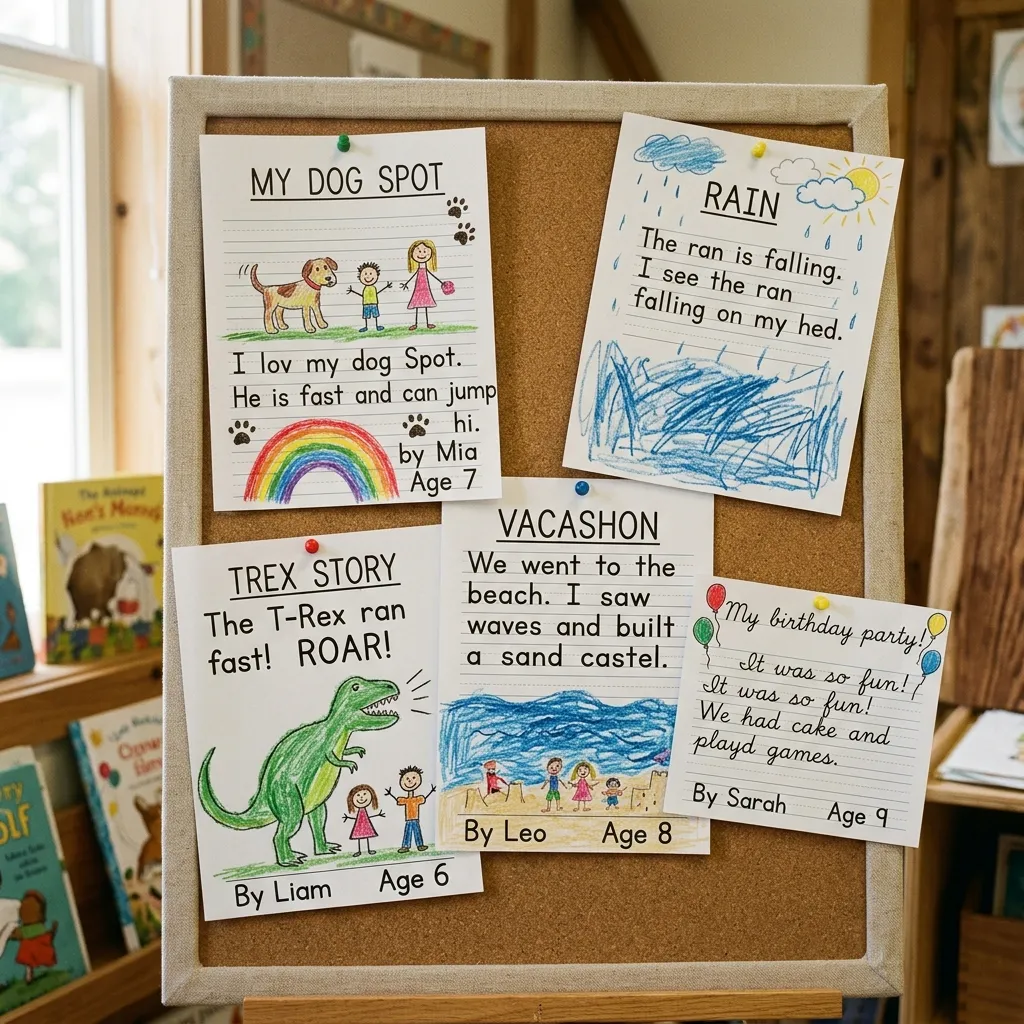
Don't worry about spelling, grammar, or even legibility at this age. If they can read it and explain it to you, that's writing.
Ages 7-9 (2nd Grade - 3rd Grade)
These children are gaining writing fluency. They can sustain writing for longer periods and are beginning to understand revision.
Prompts for this age should:
Encourage 3-5 sentences.
Include some imaginative elements.
Allow for drawing integration (many children this age still think in pictures).
Connect to their social world (friends, family, school).
Examples:
- "Imagine you switched places with your teacher for one day. What would you do? Write a story about it."
- "Write a letter to your favorite book character. Tell them what you liked about their story."
- "Pretend you discovered a new planet. Describe what lives there."
At this stage, you can gently introduce the idea of "first draft" and "final copy," but keep it low-pressure. The goal is volume and enjoyment, not perfection.
Ages 9-12 (4th Grade - 6th Grade)
Now we're in the sweet spot where children can handle complex prompts, sustain longer pieces, and genuinely enjoy creative writing.
Prompts for this age can:
Be open-ended with multiple "right" answers.
Explore emotions and relationships.
Include humor, mystery, or mild suspense.
Connect to content they're learning in school (but make it fun, not like homework).
Examples:
- "You find a time machine in your grandmother's attic. It only works once. Where do you go and why?"
- "Write a story where the villain actually has a good reason for what they're doing. Make the reader sympathize with them."
- "Pretend social media existed in medieval times. Write three posts from a knight's perspective."
Children this age can also handle prompts that require research or integrate multiple subjects. A prompt like "Write a story set in the habitat of your favorite animal, but make the animal the main character with human-like thoughts" combines creative writing with science learning.
The right writing prompt doesn't just give a child something to write about—it gives them a reason to care.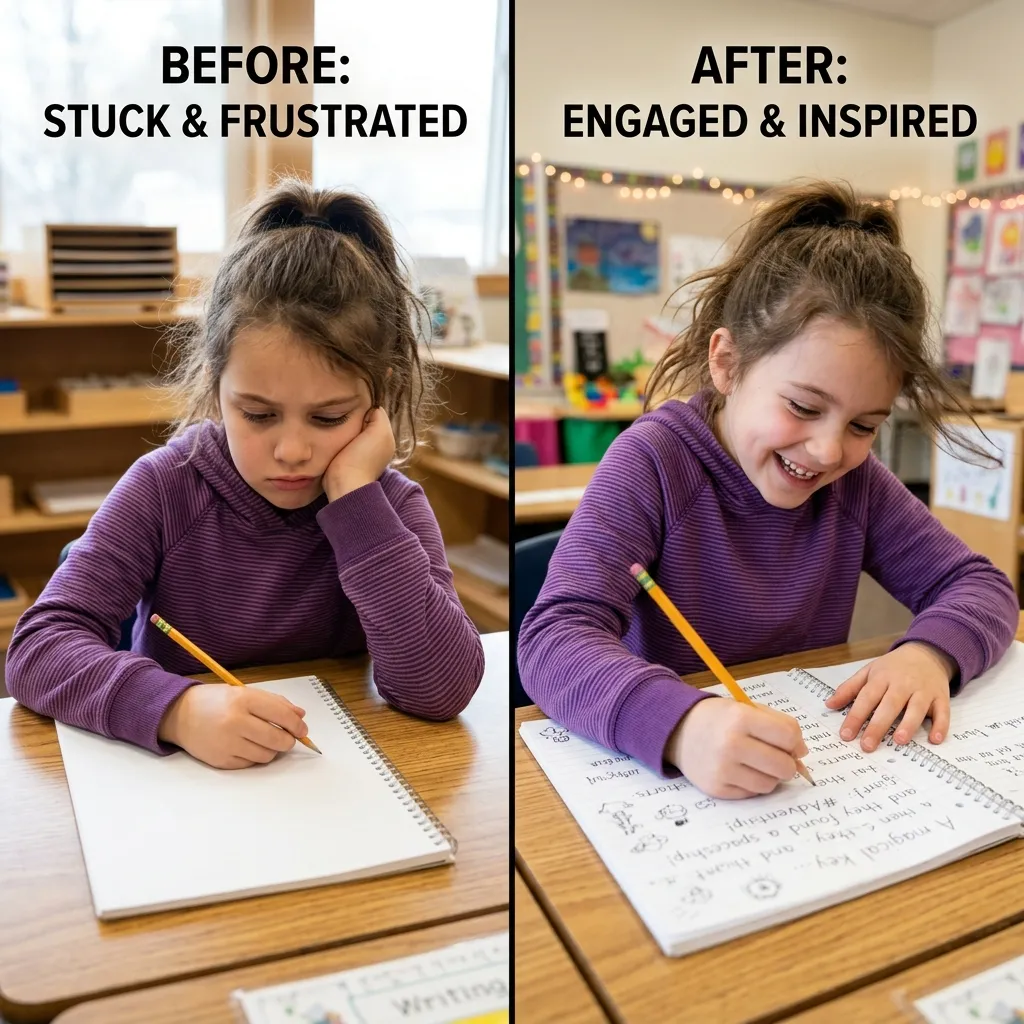
125+ Writing Prompts for Kids: Organized by Category
Now for the heart of this guide: the prompts themselves. I've organized these into categories so you can easily find prompts that match your child's interests, your teaching goals, or the mood of the day.
Remember: these are starting points, not scripts. If a prompt says "Write about a magic forest" and your child wants to write about a magic forest where all the trees are made of candy, that's not "not following the prompt"—that's creativity in action. Encourage it.
Imaginative and Fantasy Prompts (Perfect for creative writing prompts for kids)
You wake up one morning and discover you have the ability to understand what animals are saying. Which animal do you talk to first, and what do they tell you?
Imagine you shrink to the size of an ant. Describe your day from that tiny perspective. What's dangerous that used to be safe?
You find a door in your house that wasn't there yesterday. You open it and step through. Where are you? Write about your adventure.
Pretend dragons are real and you're a dragon trainer. What kind of dragon do you train? What's its name? What tricks can it do?
Write a story about a world where it rains something other than water. What falls from the sky, and how do people live with it?
You discover an old lamp that, when you rub it, a genie appears. But this genie can only grant wishes that help other people, not you. What wishes do you make?
Imagine you're the first person to set foot on a new planet. Describe what you see, hear, and feel. Is there life on this planet?
You find a pair of magic glasses. When you put them on, you can see the dreams people are having above their heads. Write about what you see above your family's heads.
Write a story about a magical school (not Harry Potter—make up your own!). What subjects do they teach? Who's the strangest teacher?
You wake up with wings. Describe your first flight. Where do you go? What problems do your new wings cause?
Related: Fantasy Writing Prompts for All Ages
Everyday Life and Feelings Prompts (Great for journal prompts for kids)
Describe your perfect day from morning to night. What would you do? Who would you spend it with?
Write about a time you felt really brave. What happened? How did you feel before, during, and after?
If you could have any superpower for just one day, what would you choose and how would you use it to help someone else?
Write a letter to yourself ten years in the future. What do you hope your life will be like? What advice would you give your future self?
Describe your favorite place in the whole world. Use all five of your senses. What does it look like, sound like, smell like, feel like, and (if appropriate) taste like?
You're planning a surprise party for someone special. What's the surprise? How do you keep it secret? What happens when they walk in?
Write about a mistake you made that turned out okay in the end. What did you learn from it?
If you could have dinner with anyone in the world (real or fictional), who would you choose and why? What would you talk about?
Describe a tradition your family has. Where did it come from? Why is it special to you?
Write about a time you felt really proud of yourself. What did you accomplish, and who noticed?
Mystery and Adventure Prompts (Ideal for story writing prompts for kids)
You come home from school and notice something is different about your house. Something small but important. What is it, and what does it mean?
Write a story that starts with this sentence: "The package arrived with no return address, but my name was written in handwriting I recognized."
You and your best friend decide to build the ultimate fort. Where do you build it? What materials do you use? What happens when you're inside?
Imagine you're a detective solving a mystery in your own neighborhood. What's missing? What clues do you find? How do you solve it?
You discover a secret passage behind your bookshelf. Where does it lead? What do you find at the end of it?
Write a story about a character who finds a map in their attic. The map leads somewhere in their own town, but it's a place they've never noticed before. Where is it?
You and your family go on a hike, but you accidentally take the wrong trail. How do you find your way back? What do you discover while you're lost?
Write about a character who can travel through mirrors. They step into their bathroom mirror and end up... where?
Imagine you're the captain of a ship (it could be a pirate ship, a spaceship, or just a regular boat). What's your mission? What problem do you encounter?
You find a camera that develops photos of things that haven't happened yet. The photo shows something that will happen tomorrow. What is it?
Seasonal and Holiday Prompts (Fun writing prompts for kids)
Write a story about the day summer vacation starts. What's the first thing you do? How does it feel to have free time ahead of you?
Imagine you're a snowflake. Describe your journey from the cloud to the ground. What do you see on the way down? Where do you land?
You're in charge of designing a new Halloween costume that's never existed before. What is it? How do you make it?
Write about the best gift you've ever given someone. Why did you choose it? How did they react?
Imagine you're a turkey (for Thanksgiving). You can understand human language. What do you hear the humans planning? How do you feel about it?
Write a story set on the Fourth of July. Include the sounds, smells, and sights of the holiday. What's your favorite part?
You find a Valentine's Day card addressed to you, but it's from your future self. What does it say?
Write about building the perfect snowman. What does he look like? What's his name? What adventure do you have together?
Imagine school is cancelled for a snow day. You look out the window and realize the snow isn't white—it's every color of the rainbow. What happens when you go outside?
Write a story about the New Year's resolution you're most excited to keep. What is it, and how will you stay motivated?
School and Friendship Prompts (Relatable elementary writing prompts)
Write about the best friend you've ever had (real or imagined). What makes them such a good friend? What's your favorite memory together?
Imagine your school is having a "reverse day" where kids are the teachers and teachers are the students. What subject do you teach? How do you handle it when the "students" (teachers) act up?
Write a story about a new kid joining your class. They're nervous. How do you help them feel welcome? What do you show them?
You're the principal for one day. What rules do you change? What fun thing do you plan for the whole school?
Write about a time you disagreed with a friend. How did you work it out? What did you learn about friendship?
Imagine you can have lunch with three people from your school (students or teachers). Who do you invite and why? What do you talk about?
Write a story about a school where every class is taught outside. What's your favorite subject to learn in the fresh air?
You're organizing a talent show at your school. What's your talent? What's the most surprising act in the show?
Write about a perfect recess. Who are you playing with? What games do you play? What makes it the best recess ever?
Imagine you can give everyone in your class a superpower for one day. What power does each person get? How does it change the school day?
Animal and Nature Prompts (Engaging writing ideas for kids)
If you could be any animal for a week, which would you choose and why? Write a diary of your week as that animal.
You discover that plants can talk, but only to you. What do they tell you about their lives? What do they need?
Write a story from the perspective of your pet (or a pet you wish you had). What do they think about all day? What's their opinion of your family?
Imagine you're a scientist discovering a new species of animal. Describe what it looks like, what it eats, and where it lives. What do you name it?
You find a bird with a broken wing. You nurse it back to health. When it can fly again, it leaves you a gift. What is it?
Write about a day in the life of an ant. You're part of a colony. What's your job? What dangers do you face?
Imagine you're camping and you hear a noise outside your tent at night. You unzip the tent and... what's there?
You plant a seed and water it every day. But the plant that grows is like nothing you've ever seen before. What is it? What does it do?
Write a story about a world where humans and animals switch places. Animals are in charge, and humans live in the wild. What's it like?
You're at the beach and you find a message in a bottle. It's from a child your age who lives on an island. What does the message say? Write your response.
Time Travel and History Prompts (Educational writing activities for kids)
You have a time machine that can only go back to any Saturday in history. Which Saturday do you visit and why?
Imagine you're a kid living in the year 1900. What's different about your daily life? What's surprisingly the same?
Write a story about meeting your grandparents (or great-grandparents) when they were your age. What do you have in common? What's completely different?
You find a time capsule that was buried in 1950. You open it. What's inside? What does it tell you about that year?
Imagine you could interview any person from history. Who do you choose? What three questions would you ask them?
Write a story set in the future—the year 2125. What's different about daily life? What problems have been solved? What new problems exist?
You're a kid during the American Revolution. Your town is about to be marched through by soldiers. What do you do? How do you help?
Imagine you're living during the time when the pyramids were being built. You have an idea that would make the construction easier. What's your idea?
Write about a day in the life of a child who lived in a castle during medieval times. What's fun about your life? What's hard?
You're a reporter in 1969, covering the moon landing. Write your newspaper article about this historic event.
Picture Writing Prompts for Kids (Visual inspiration)
For these prompts, you'll need to describe images or (if publishing) actually insert images. The idea is that the picture sparks the story.
[Describe a picture of an abandoned amusement park]: Write a story about what happened here. Why is it abandoned? Is it really abandoned?
[Describe a picture of a door in a tree trunk that's clearly the size for a small creature]: Who uses this door? What's on the other side? Write their story.
[Describe a picture of a city skyline at sunset, but with flying cars]: What year is it? How did flying cars change daily life? Tell a story set in this city.
[Describe a picture of a child looking at themselves in a mirror, but their reflection is doing something different]: Write a story about what happens when the reflection steps out of the mirror.
[Describe a picture of an ordinary classroom, but there's something glowing under the teacher's desk]: Your character notices this. What do they do? What do they discover?
Related: Picture Writing Prompts with Images
"What If" Prompts (Sparking imagination with fun writing prompts for kids)
What if everyone woke up one day speaking a different language, but they all spoke the SAME different language? How do you communicate?
What if shadows could leave the ground and move around independently? What would your shadow do when you're not looking?
What if you could press a button and instantly know how to do anything (play piano, speak French, basket weave)? Would you press it? What would you learn first?
What if books were alive and could talk? Which book would you most want to have a conversation with?
What if gravity stopped working for one hour every day? What hour would you want it to be, and what would you do during that hour?
What if animals could apply for jobs? What job would your pet apply for? Write their job application.
What if you found a store where you could buy extra hours in the day? Would you buy them? What would you do with the extra time?
What if clouds were made of different things besides water vapor? What if one type of cloud was made of cotton candy? What would that day be like?
What if you could trade places with any fictional character for a week? Who would you choose? What's harder about their life than you expected?
What if plants grew overnight to be as tall as trees? What if the grass in your yard was as tall as you by morning? How do you get to school?
Persuasive and Opinion Writing Prompts (Building critical thinking)
Should kids have homework or not? Write an essay convincing your teacher of your opinion. Use at least three reasons.
What's the best season of the year? Convince your reader that your favorite season is the best.
Should students be allowed to chew gum in class? Take a side and write a persuasive paragraph.
What's the best book you've ever read? Write a review convincing other kids to read it.
Should recess be longer? Write a letter to your principal convincing them to give students more recess time.
What's the best pet for a kid your age? Write an essay convincing your parents to let you get this pet.
Should kids be allowed to vote on school lunch menus? Take a position and support it.
What's the most important invention in history? Write an essay explaining why this invention matters more than any other.
Should your school have uniforms? Take a side and write a persuasive essay.
What's the best movie you've ever seen? Write a review that convinces others to watch it.
Poetry and Sensory Prompts (Expanding writing activities for kids)
Write a poem about your favorite color. Don't just say what it is—describe what it smells like, sounds like, feels like.
Go outside for five minutes. Come back in and write down every sound you heard. Now turn those sounds into a poem.
Write a "five senses" poem about pizza (or any food). One stanza for each sense.
Write a rhyming poem about your best friend. It doesn't have to be good—it just has to rhyme!
Choose an emotion (happy, sad, excited, nervous, etc.). Write a poem where every line starts with "It tastes like..." or "It sounds like..." Use metaphors.
Write a shape poem. Pick an object (a star, a baseball, a heart). Write a poem in the shape of that object.
Write a haiku (three lines: 5 syllables, 7 syllables, 5 syllables) about your favorite animal.
Write a list poem. The title is "Things That Make Me Laugh." List 10-15 things. Now turn it into a poem by adding descriptive language.
Write a poem from the perspective of something that can't talk: a pencil, a cloud, a doorknob. What do they notice about humans?
Write a "where I'm from" poem. Start every line with "I'm from..." and fill in with details from your life (I'm from Sunday pancakes and library books and the smell of rain...).
Advanced Prompts for Kids Who Love Writing (Challenging kids writing exercises)
Write a story with no dialogue. Only action and description. How do you show what characters are thinking and feeling without them speaking?
Write a story that starts at the end. The first sentence is: "In the end, it turned out the dragon was afraid of mice." Now work backward.
You're writing a story, but your main character refuses to do what you want them to do. They keep making different choices. Write this story—about a character with free will.
Write a story in second person ("You wake up and..."). The reader is the main character.
Write a story that takes place entirely in one room. The room is your bedroom. Something extraordinary happens there. What is it?
Write a story with only dialogue. No "he said" or "she asked." Just the words people speak. Can the reader follow it?
You're a newspaper reporter. Write a news article about something ordinary that happened in your school today—but make it sound exciting.
Write a story where the villain tells their side of what happened. Make the reader understand why they did what they did.
Write a story that includes these three things: a lost key, a birthday cake, and a lie. They don't have to be the main plot—they can just appear in the story.
You're writing a guidebook for kids who will live in your town 100 years from now. What do they need to know? What will have changed?
Daily Writing Prompts for Kids (Quick writes for morning work or journals)
What are three things you're grateful for today? Why?
Describe the lunch you wish you had today. Be specific—what does it taste like?
If you could switch lives with any animal for one day, which would you choose and why?
Write a compliment to someone in your class. Don't sign it. Just write something kind.
What's something hard that you're getting better at? How does it feel to improve?
You're the teacher today. What's the most important thing you want your students to learn?
Write about a sound you love and a sound you hate. What are they? Why do you feel that way?
If you could add one room to your house, what would it be? Describe it in detail.
What's the kindest thing someone has done for you recently? How did it make you feel?
You have a time machine that goes forward exactly one year. You visit yourself. What do you hope you'll tell your current self?
Practical Tips for Using Writing Prompts with Kids
Having 125 prompts is great, but knowing how to use them is what makes the difference between "another assignment" and "the best part of my day." Here are proven strategies.
Create a Writing-Friendly Environment
Writing is vulnerable. When children write, they're sharing their thoughts, their imagination, and pieces of themselves. If the environment feels judgment-filled, they'll shut down.
Instead, create a writing space that feels safe and inspiring:
Have good lighting and comfortable seating. If a child associates writing with a hard chair and harsh fluorescent lights, they'll resist it.
Keep writing supplies visible and accessible. A basket of colorful notebooks, fun pencils, erasers (because revision is normal!), and perhaps some inspiring quote posters can make writing feel special.
Play soft instrumental music during writing time. Many children focus better with gentle background noise. Movie soundtracks (without lyrics) work well.
Allow movement. Some children think better when they can bounce a leg or sit on a yoga ball. Let them find their writing posture.
Most importantly, don't hover. Once you've given the prompt, step back. Let them struggle productively. If they're stuck, ask guiding questions rather than giving answers.
Adapt Prompts for Reluctant Writers
Some children love writing and will fill pages given any prompt. Others... not so much.
If you're working with a reluctant writer, try these adaptations:
Let them dictate while you type or write. The physical act of writing can be a barrier. Remove it, and you might find they have brilliant ideas.
Allow illustration-heavy responses. A child who "hates writing" might love creating a graphic novel-style response to a prompt. The words are still there—they're just supporting the pictures.
Use prompts that connect to their obsessions. If they love video games, use gaming prompts. If they love sports, use sports prompts. Interest bridges the motivation gap.
Start absurdly small. "Write one sentence" is a perfectly acceptable goal for a truly reluctant writer. Once they've written one sentence, they might just keep going.
Celebrate effort over product. "I noticed you kept writing even when you weren't sure what to say next—that's real writing!" matters more than "This has three spelling mistakes."
Related: Overcoming Writing Resistance in Children
Balance Structure and Creativity
This is the eternal tension in teaching writing: children need structure (they're not born knowing how to organize a paragraph), but too much structure kills creativity.
Here's the balance that works:
For the first 5-10 minutes of writing time, keep it completely free. No rules about topic sentences or transition words. Just write.
Then, if you're working on a specific skill (like using dialogue or organizing with paragraphs), do a 5-minute mini-lesson.
Then go back to writing, but now they can try the skill if they want to.
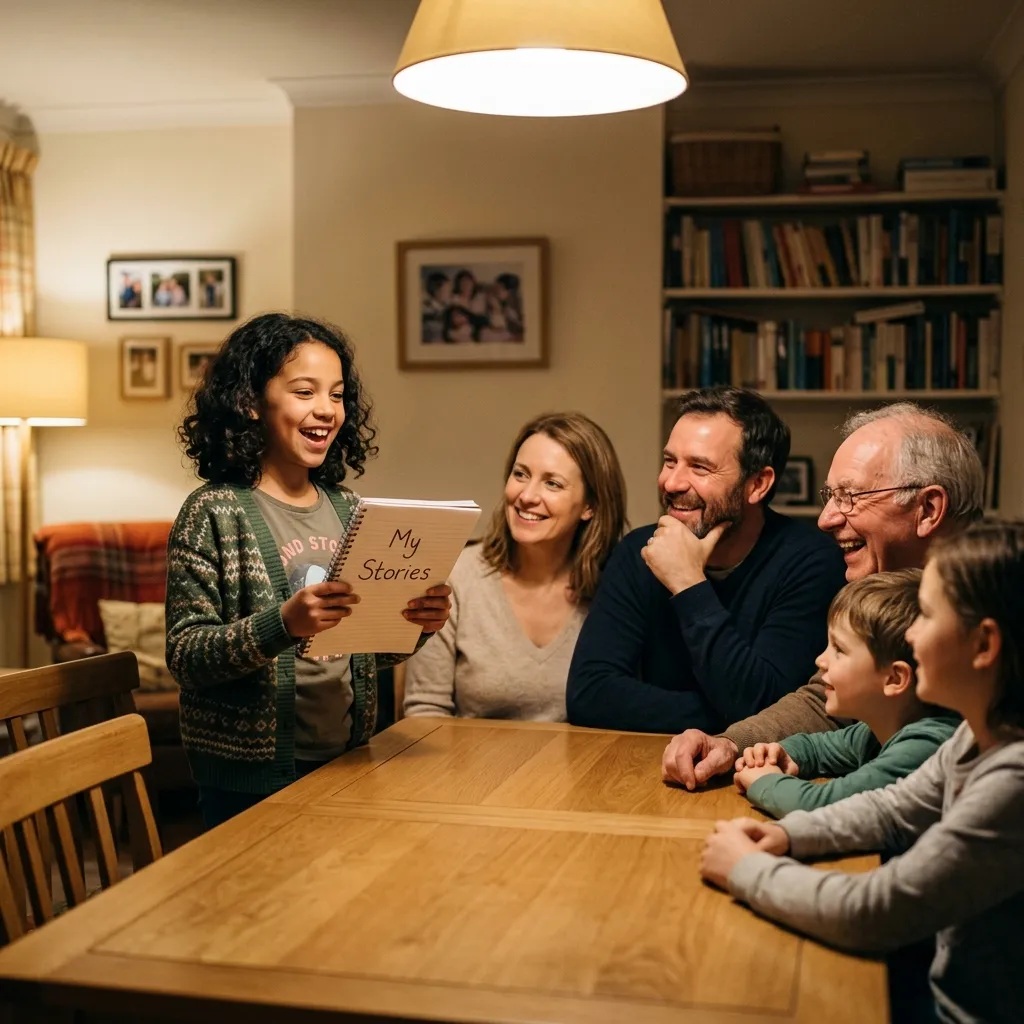
At the end, celebrate whatever they produced. Maybe ask if they want to share. Never require sharing—some children need to write privately for a while before they're ready to go public.
Also, consider the "breadth vs. depth" question. Some children benefit from daily quick-writes (breadth—many prompts, short responses). Others do better with one prompt per week that they revise and polish (depth—fewer prompts, more refinement). Both approaches are valid. Match the approach to the child.
Common Mistakes When Using Writing Prompts (And How to Avoid Them)
Even with the best intentions, it's easy to misuse writing prompts in ways that actually discourage children. Here are the most common pitfalls.
Mistake 1: Over-Correcting
You're excited! Your child wrote a story! And you can see exactly how to make it better! You grab a red pen (or open the document and start tracking changes) and... stop.
Over-correcting is the fastest way to make a child never want to write again.
Better approach: Pick ONE thing to compliment and ONE gentle suggestion. "I love how you described the dragon's cave—I could really picture it! Next time, what if you also told us how the cave smelled?"
Notice the difference? The correction is framed as an invitation to add, not a criticism of what's missing.
Also, consider the purpose of the writing. If it's a quick journal entry, don't correct anything. If it's a piece they're revising for publication (in the school newsletter, on the refrigerator, etc.), then yes, address errors—but still pick your battles.
Mistake 2: Using Writing as Punishment
This should be obvious, but somehow it keeps happening: "You talked during the lesson, so now you have to write three paragraphs about why that was wrong."
Never, ever use writing as punishment.
When you do this, you're teaching children that writing is something unpleasant that happens to you when you're in trouble. That association can last for years.
Writing should be a positive, creative, empowering activity. If a child needs consequences, find them elsewhere.
Mistake 3: Only Assigning Prompts That Are "Educational"
I get it. You want writing time to be productive. You want it to reinforce social studies or practice vocabulary or teach a moral lesson.
But if every prompt is "Write about why it's important to tell the truth" or "Write about the three branches of government," children will learn that writing is preachy and boring.
Balance is key. Sure, occasionally use content-connected prompts. But also give them prompts that are just plain fun. "You wake up with x-ray vision" has no educational agenda except making writing enjoyable. And enjoyable writing leads to more writing, which leads to better writing.
Think of it like food. Yes, children need nutritious meals. But they also need the occasional ice cream sundae. Both have their place.
Mistake 4: Not Providing Enough Support
On the flip side, some children need more support than just handing them a prompt and saying "Go!"
If a child is staring at the page, offer:
- Sentence starters ("One day, I was walking through the forest when suddenly...")
- A brainstorming session (talk about the prompt for five minutes before writing)
- A partner to discuss ideas with
- A picture to look at that relates to the prompt
- The option to tell you their idea orally before writing it
Scaffolding isn't cheating. It's teaching. Gradually remove the scaffolds as the child gains confidence.
The Benefits of Regular Creative Writing: What the Research Shows
We've touched on this, but it deserves its own section. Because when parents or administrators ask "Why should we spend time on creative writing when there's so much else to cover?", you need answers.
Academic Benefits That Go Beyond Language Arts
Students who write creatively perform better in reading comprehension. The act of constructing meaning on the page helps them deconstruct meaning when reading.
Creative writing also builds vocabulary in context. A child who needs the word "luminous" to describe their magic forest will remember that word far better than a child who memorizes it for a test.
There's also evidence that creative writing improves performance in other subjects. Science requires clear explanation of processes. History requires understanding multiple perspectives. Math word problems require reading comprehension. All of these are supported by strong writing skills.
Social-Emotional Benefits: The Hidden Superpower of Writing
This is the benefit that doesn't show up on standardized tests but matters enormously for life success.
Writing helps children process emotions. A child who writes about a character dealing with jealousy or fear is practicing empathy. They're also learning that feelings can be examined, understood, and managed.
Creative writing also builds resilience. A story where the main character fails, tries again, and eventually succeeds (maybe with help from friends) is teaching growth mindset. And because it's fictional, children can absorb the lesson without feeling lectured.
There's also the benefit of identity development. Adolescents especially use writing to figure out who they are and what they believe. Giving them regular, low-stakes opportunities to write about their values, their questions, and their observations helps them develop into thoughtful adults.
The Long-Term Impact: Writing as a Life Skill
Let's be practical. Most children won't grow up to be novelists. But almost all of them will need to write clearly and persuasively in their adult lives.
Whether they're writing emails to colleagues, creating presentations, documenting processes, or advocating for themselves in writing, the ability to express thoughts clearly matters.
Regular creative writing—even just 15 minutes a day—builds those skills. It teaches children to organize thoughts, choose precise words, consider audience, and revise for clarity.
And for the children who DO grow up to be novelists, journalists, screenwriters, or any kind of professional writer? You're nurturing that dream by making writing a normal, enjoyable part of their lives now.
Every child's writing process is unique. Some write silently, some think out loud, some draw first—all pathways lead to communication.
Frequently Asked Questions About Writing Prompts for Kids
Q1: At what age should I start using writing prompts with my child?
You can start as soon as your child can hold a pencil and form letters, which is usually around age 5 or 6. At that stage, keep prompts very simple ("Draw and write one sentence about your favorite animal") and always allow invented spelling. The goal isn't perfection—it's developing a positive association with writing.
Q2: My child hates writing. Will prompts really help?
They might, especially if you adapt the prompts to their interests and allow alternative formats (typing, dictating, illustrating). Also, examine WHY they hate writing. Is it because they have undiagnosed dysgraphia or dyslexia? Because they're perfectionists who erase everything? Because they think they're "not good at it"? Once you identify the root cause, you can address it. Prompts help with motivation, but they're not a magic cure for underlying difficulties.
Q3: How long should writing time be for different ages?
As a general guideline: ages 5-7 can usually sustain 10-15 minutes of writing time. Ages 7-9 can handle 15-25 minutes. Ages 9-12 can often write for 30-45 minutes if they're engaged. But these are just guidelines. Some children can focus longer, and some need shorter sessions. Watch for signs of fatigue (slumping, erasing everything, getting silly) and end on a positive note.
Q4: Should I correct my child's spelling and grammar?
During free writing time, no. Let spelling and grammar mistakes go. If you correct every error, the child will become afraid to take risks or make mistakes. During revision time (which is separate from drafting time), you can gently point out patterns—"I notice you're using 'they' when you mean 'their.' Let's fix those together." But always balance corrections with specific praise.
Q5: My child wants to write about the same thing over and over (usually something they're obsessed with). Should I redirect them?
Not necessarily. Repetitive writing topics are how children master skills. If they're writing about Minecraft for the fifteenth time, but this time they're using dialogue or describing settings in more detail, they're still growing as writers. Eventually, gently suggest expanding: "I've noticed you love writing about Minecraft. What if your character discovers a new biome that's like nothing in the game?" Use the obsession as a bridge to new ideas.
Q6: Can I use writing prompts in a multilingual household?
Absolutely! In fact, writing prompts can support bilingual development. You can offer the prompt in both languages and let the child respond in whichever they're most comfortable with. Or have them write the same prompt in both languages and compare how the language itself changes the story. This builds metalinguistic awareness—thinking about how language works.
Q7: How do I know if my child's writing is on track for their grade level?
Every child develops at their own pace, and "grade level" is a rough guide, not a strict rule. That said, if you're concerned—especially if your child is struggling with basic sentence construction well past the age when most children master it—talk to their teacher or consider an evaluation. Sometimes learning differences like dyslexia or dysgraphia are masking a child's true writing potential.
Q8: Should we use prompts every day or just sometimes?
It depends on your goals. Daily quick-writes (5-10 minutes) build fluency and reduce writing anxiety. They're like the writing equivalent of playing scales on a piano—not glamorous, but they build foundational skills. But you should also have longer, deeper writing sessions where children draft, revise, and polish pieces. A mix of both approaches is ideal.
Q9: My child's school doesn't use writing prompts. Should I use them at home?
Yes! Writing prompts at home can complement whatever approach the school uses. If the school focuses heavily on structured, formulaic writing (five-paragraph essays, etc.), home writing time can be the place where your child experiments, takes risks, and writes purely for joy. The two approaches will reinforce each other.
Q10: Where can I find more prompts when we've used all of these?
Once you've worked through these 125 prompts, you'll find that generating new ones gets easier. Start by tweaking these: change "dragon" to "unicorn," change "time machine" to "magic portal," etc. You can also involve your child in prompt generation: "What's a question you have about the world? Let's turn that into a writing prompt." Also, many educational websites offer free prompt lists. Bookmark a few favorites and rotate through them.
Conclusion: Every Child Is a Writer (Yes, Every Single One)
If you take nothing else away from this guide, let it be this: every child has stories to tell. Every child has imagination. Every child can write.
They might not write like their grade-level expectations say they "should." They might spell "because" as "becuz" well past when their teacher wishes they wouldn't. They might write stories where the plot makes sense only to them, or where the main character is suspiciously similar to themselves with magic powers.
That's all okay.
Writing prompts aren't about producing miniature professional authors. They're about giving children the tools to express themselves, the confidence to try, and the joy of discovering that their thoughts matter enough to be written down.
So tonight, or this weekend, or whenever you next sit down with a child and a notebook, try one of these prompts. Or better yet, let them choose. Watch what happens when they realize that the blank page isn't a test—it's an invitation.
And if you're a child reading this (because yes, some children will read guides about writing)—know this: your words matter. Your stories deserve to be told. And every single writer, even the famous ones, started exactly where you are: with a blank page and a "what if?"
Now go write something amazing.
Call to Action
Ready to transform writing time in your home or classroom?
Start with just ONE prompt from this list. Pick one that made you smile or that you think will resonate with your child. Try it this week.
And when you do, we'd love to hear about it. What prompt sparked the most excitement? Which one led to the most unexpected story? What did you learn about your child's imagination in the process?
While you're here, explore PromptPre's other writing prompt collections:
- Fantasy Writing Prompts for Kids Who Love Magic and Adventure
- Seasonal Writing Prompts for Every Month of the Year
- Persuasive Writing Prompts for Developing Critical Thinking
- Picture Writing Prompts with Real Photographs
Because every child deserves to discover the writer within them. Sometimes they just need the right prompt to show them the way.
Happy writing!
You May Also Like
Read more tips, guides, and creative writing strategies:

Roll the Story Builder Dice!
Feeling stuck? Roll our interactive story dice to generate thousands of unique, creative writing prompts instantly and start writing.
Play Game 🎲