125+ Creative Writing Prompts for 4th Grade

125+ Creative Writing Prompts for 4th Grade
Introduction
Fourth grade is a useful bridge between short responses and more developed writing. The prompts below give students enough structure to begin while leaving room for their own ideas. Use them as a quick warm-up, a choice board, a journal entry, or the seed of a longer piece.
As a parent or educator, you've probably experienced the frustration of asking a child to write, only to be met with "I don't know what to write about!" That's where writing prompts come in. These simple sentence starters, questions, or scenarios serve as creative sparks that ignite young minds and get ideas flowing.
This guide is focused on 4th grade writers. The ideas move between imagination, personal experience, description, and opinion so students can practice different kinds of writing without being asked to work at a middle-school level.
But this isn't just a list. We'll also discuss why writing prompts matter, how to use them effectively, common mistakes to avoid, and strategies to make writing time the highlight of your child's day. Whether you're a teacher looking for classroom resources, a homeschool parent seeking curriculum ideas, or simply someone who wants to encourage a child's creativity, you'll find practical, actionable advice here.
Let's dive in and discover how the right prompt at the right time can change everything.
When children have engaging prompts, writing becomes a form of play rather than work.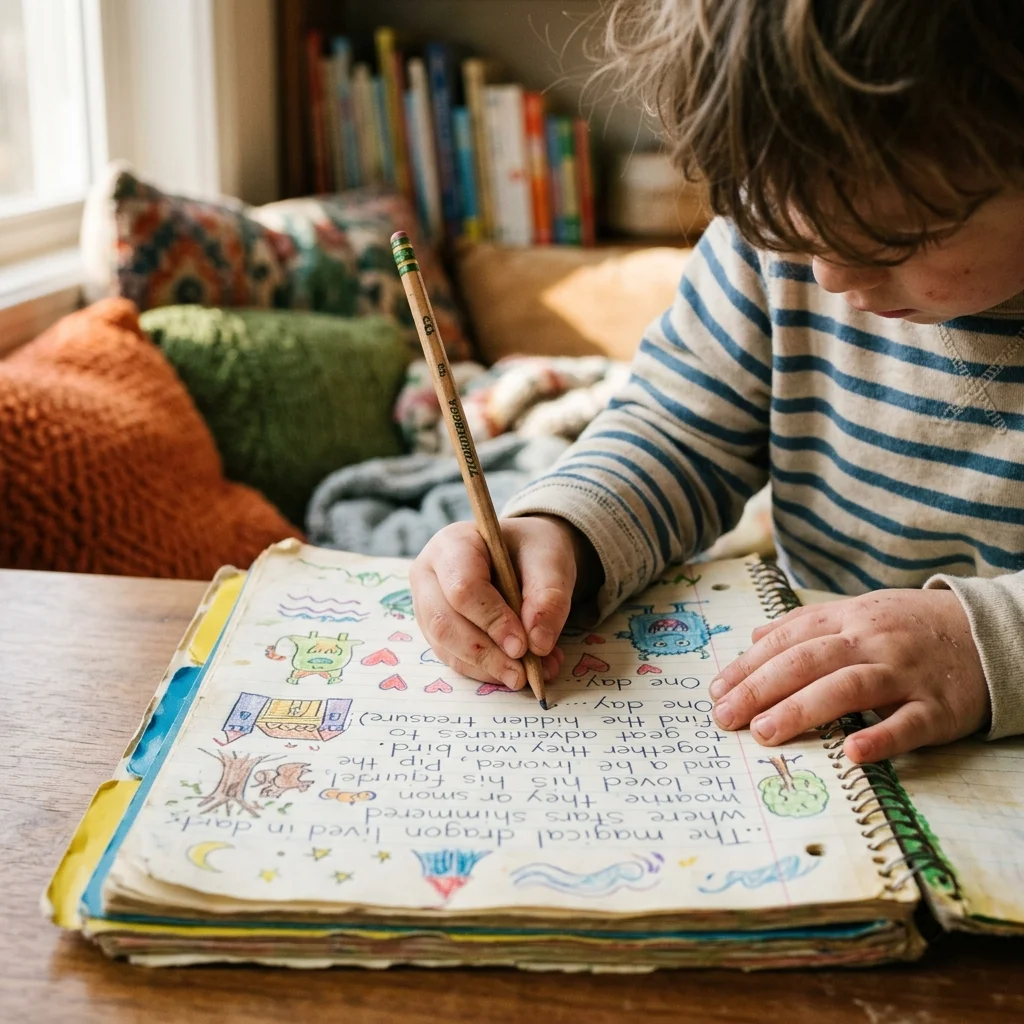
Section 1: Why Writing Prompts Matter for Child Development
Before we get to the actual prompts, let's talk about why they're so powerful. Writing prompts aren't just fillers to keep kids busy. They serve several critical developmental functions that go far beyond improving handwriting or grammar.
Building Confidence Through Low-Stakes Practice
Many children feel intimidated by writing because they think every word needs to be perfect. Writing prompts remove that pressure by providing a starting point. When a child doesn't have to stare at a blank page wondering where to begin, they can focus on expressing their ideas. This builds confidence, especially for reluctant writers who may have had negative experiences with writing in the past.
Developing Critical Thinking Skills
Good writing prompts don't just ask for descriptions. They require children to analyze situations, consider different perspectives, solve problems, and make connections between ideas. A prompt like "What would happen if it rained food instead of water?" seems silly on the surface, but it requires a child to think through cause and effect, consider practical implications, and use logic alongside imagination.
Enhancing Emotional Intelligence
Writing prompts that explore feelings, relationships, and social situations help children develop empathy and emotional awareness. When a child writes from the perspective of someone different from themselves, or explores how a character might feel in a difficult situation, they're building crucial social-emotional skills that will serve them throughout life.
Improving Communication Skills
The ability to express thoughts clearly in writing is fundamental to success in almost every field. Regular writing practice helps children learn to organize their thoughts, use descriptive language, structure arguments, and engage readers. These skills transfer to verbal communication as well, making children more effective speakers and listeners.
Creating a Lifelong Habit
Perhaps most importantly, writing prompts can help children develop a positive association with writing. When writing time is fun, creative, and low-pressure, children are more likely to continue writing voluntarily. This can lead to journaling, creative writing as a hobby, or simply comfort with written communication that will benefit them in school and beyond.
The key is choosing age-appropriate prompts that match where your child is developmentally. A prompt that excites a 4th grader might frustrate a kindergartner, while a prompt designed for middle schoolers might bore a 2nd grader. That's why we've organized this guide by age group.
Section 2: Writing Prompts for Kids (Ages 6-10)
Young children in elementary school are naturally imaginative and enthusiastic. They haven't yet developed the self-consciousness that can shut down creativity in older kids. The best writing prompts for kids in this age group are simple, concrete, and open-ended enough to allow for wild imagination while providing enough structure to prevent overwhelm.
Animal and Nature Prompts
If you could talk to animals for one day, which animal would you choose to have a conversation with and what would you ask them?
Imagine you wake up one morning and discover you've turned into your favorite animal. Describe your day from the animal's perspective.
You find a magic seed that grows into whatever you wish for. What does your plant grow, and what do you do with it?
Describe the most colorful garden you can imagine. What flowers, plants, and creatures live there?
If you could be any sea creature for a week, which would you choose and why? Write about your underwater adventures.
You discover a nest of dragon eggs in your backyard. What do you do when they start to hatch?
Imagine you're a bird flying over your town. What do you see from up high that you've never noticed before?
Write a story about a lost puppy who needs to find his way home. What obstacles does he face, and who helps him?
If trees could talk, what stories would the oldest tree in the forest tell?
You wake up and realize you've shrunk to the size of an ant. Describe your house from this tiny perspective.
Adventure and Fantasy Prompts
You find a mysterious map in your attic that leads to a hidden treasure in your own neighborhood. Where does it lead?
Imagine you have a time machine that only works for one hour. Where do you go and what do you do?
You discover a secret door in your school that leads to a magical world. What do you find on the other side?
If you could have any superpower for one day, what would you choose and how would you use it to help others?
Write about a day when everything in your house comes alive and starts talking. What do your toys, furniture, and appliances say?
You're the captain of a spaceship exploring a new planet. Describe what you discover there.
Imagine you find a pair of magic shoes that can take you anywhere when you click your heels together. Where do you go first?
You switch places with the principal of your school for one day. What changes do you make?
Write a story about a child who discovers they can turn invisible whenever they hold their breath.
You find a genie in a bottle, but the genie only grants wishes that help other people. What wishes do you make?
Everyay Life and Feelings Prompts
Describe the best day you've ever had. What made it so special?
Write about a time you felt really proud of yourself. What did you accomplish?
If you could have dinner with anyone in the world, real or fictional, who would you choose and why?
Imagine you're planning a surprise party for someone special. What do you do to make it perfect?
Write about your favorite place in the whole world. Why do you love it there?
If you could trade places with anyone in your family for a day, who would it be and what would you do?
Describe your ideal Saturday from morning to night. What would you do if you could plan the perfect day?
Write about a time you had to be brave. What happened and how did you feel?
If you could give one gift to every child in the world, what would it be and why?
Imagine you're baking a cake, but you accidentally use magic ingredients. What happens when someone takes a bite?
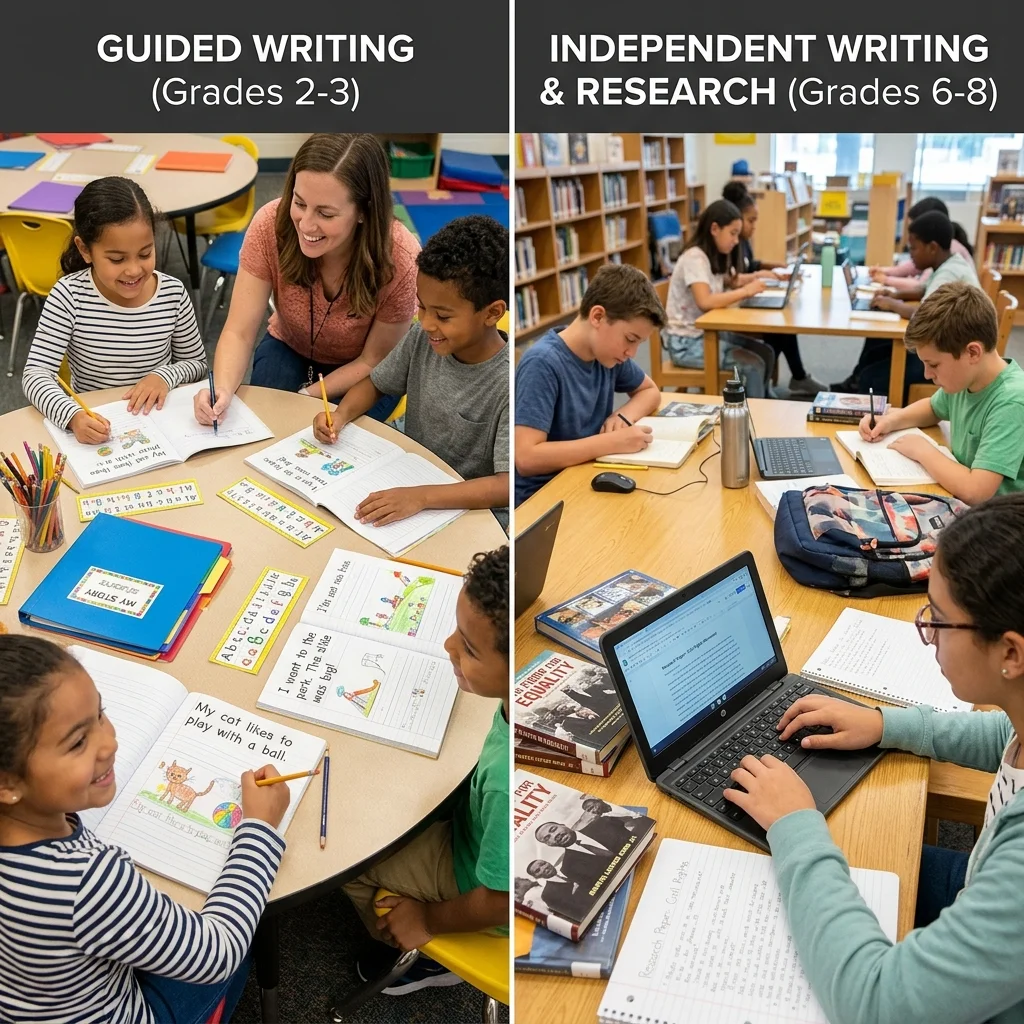
Section 3: Writing Prompts for Middle School (Grades 6-8)
Middle school students are in a unique stage of development. They're capable of more complex reasoning, they're developing their own identities and values, and they're beginning to think about their place in the larger world. Writing prompts for middle school should reflect this growth while still being engaging and accessible.
Identity and Self-Discovery Prompts
If you could describe yourself in just three words, what would they be and why? Write about how these words represent who you are.
Imagine you're writing a letter to your future self ten years from now. What advice would you give, and what questions would you ask?
What is something you believe in strongly? Write a persuasive piece explaining your belief and why it matters to you.
Describe a moment when you realized you were growing up. What changed, and how did you feel about it?
If you could trade lives with anyone for a week, who would it be and what would you hope to learn from the experience?
Write about a tradition your family has that's special to you. Why is it important, and how did it start?
What is a challenge you've overcome that made you stronger? Describe the experience and what you learned.
If you could add one subject to your school's curriculum that isn't currently taught, what would it be and why is it important?
Write about a time you disagreed with a friend or family member. How did you handle it, and what did the experience teach you about communication?
Imagine you're creating a time capsule that will be opened in 50 years. What items would you include that represent who you are today?
Social Issues and Ethics Prompts
Should schools have uniforms? Write a persuasive essay arguing for one side of this debate.
Imagine you witness someone being bullied. Write about three different ways you could respond and the potential outcomes of each.
What is the most important quality in a friend? Write about why this quality matters and how you can cultivate it in your own friendships.
If you could solve one problem in your community, what would it be and how would you address it?
Write about a time you had to make a difficult decision. What factors did you consider, and how did you ultimately decide?
Should kids your age have social media accounts? Argue for or against with specific reasons.
Imagine you're the mayor of your town for a day. What three changes would you make and why?
Write about a historical figure you admire. What qualities did they have that you'd like to develop in yourself?
If you could create one law that everyone in the world had to follow, what would it be and why would it make the world better?
Describe a time when you saw someone do something kind for a stranger. How did it make you feel, and did it inspire you to do something similar?
Future and Career Exploration Prompts
What career are you most interested in right now? Write about what attracts you to this field and what steps you'd need to take to pursue it.
Imagine you're 30 years old. What does your life look like? Where do you live, what do you do, and who is important to you?
If you could invent something that would make life easier for people, what would it be? Describe how it works and who would benefit.
Write about a skill you'd like to master in the next five years. Why is it important to you, and how will you go about learning it?
If you could travel anywhere in the world to learn about a different culture, where would you go and what would you hope to discover?
Imagine you're writing a book about your life so far. What would the title be, and what would the chapters be called?
What is a problem in the world that you hope your generation will solve? How do you think it could be addressed?
If you could have dinner with any three people from history, who would you choose and what would you ask them?
Write about a cause or charity you care about. Why is it important, and how could young people get involved?
Imagine you're creating a YouTube channel, podcast, or blog. What would your content be about, and who is your target audience?
Section 4: 4th Grade Writing Prompts (Age-Appropriate & Standards-Aligned)
Fourth grade is a pivotal year for writing development. Students are transitioning from learning to write to writing to learn. They're expected to write with more detail, structure their writing more formally, and begin to revise and edit their work. These 4th grade writing prompts are designed to meet children where they are while gently pushing them toward these new expectations.
Narrative Writing Prompts for 4th Grade
Write about a time you tried something new. What was it, how did you feel before and after, and would you do it again?
Imagine you find a magic key that opens any door in the world. Which door do you open first, and what do you discover?
Write a story about a day when your teacher announces that there will be no rules at school for one day. What happens?
Describe the best gift you ever received. Who gave it to you, why was it special, and how did you feel when you opened it?
You come home from school and find that your pet has learned how to talk. What is the first thing they say to you?
Write about a time you worked hard to achieve something. What was your goal, what steps did you take, and how did it feel when you succeeded?
Imagine you're the main character in your favorite book. Rewrite the ending with a twist that changes everything.
Write a story about a mysterious package that arrives at your door with your name on it, but no return address. What's inside?
Describe your perfect treehouse or hideout. Where would it be, what would it look like, and what would you do there?
You switch places with your favorite celebrity for a day. Write about your day from the moment you wake up to when you go to sleep.
Informational and Opinion Writing Prompts for 4th Grade
What is your favorite season and why? Write a persuasive piece convincing someone that your favorite season is the best.
Choose an animal you find interesting and write a report teaching others about this animal's habitat, diet, and unique features.
Should kids your age have homework? Write an opinion piece with at least three reasons to support your position.
Explain how to make or do something you're good at. Write step-by-step instructions that someone your age could follow.
What is the most important invention in history? Write an essay explaining why this invention matters and how it changed the world.
Compare and contrast your life with the life of a child who lived 100 years ago. What is similar and what is different?
Write a review of your favorite book, movie, or video game. What did you like about it, and who else would enjoy it?
If you could change one rule at your school, what would it be and why? Write a persuasive letter to your principal explaining your idea.
Choose a place you've visited and write a descriptive essay that helps readers imagine they're there with you.
What does it mean to be a good friend? Write an essay explaining the qualities of a good friend and why friendship is important.
Research and STEM-Related 4th Grade Writing Prompts
Choose a state or country you'd like to learn about. Write a report covering its geography, climate, interesting facts, and what you'd like to see if you visited.
Imagine you're a scientist discovering a new planet. Describe the planet's features, any life forms that live there, and what makes it unique.
Write about a famous person from history who interests you. What did they accomplish, what obstacles did they face, and why do we remember them today?
Explain the water cycle or another science concept you've learned about. Write as if you're teaching it to a younger student.
If you could interview any animal (and they could answer you), which animal would you choose and what questions would you ask? Write the interview.
Choose an environmental issue that matters to you (like pollution, endangered animals, or conservation). Write about why it's important and what kids your age can do to help.
Imagine you're designing a new amusement park. What rides and attractions would you include, how would you keep guests safe, and what would make your park unique?
Write about three different careers that interest you. What do people in these careers do, what skills do they need, and what education is required?
Explain how to be safe online. What rules should kids your age follow, and why is internet safety important?
You're asked to create a new holiday. What would it celebrate, when would it be, and how would people observe it?
Section 5: How to Use Writing Prompts Effectively
Having a list of prompts is one thing. Using them effectively is another. Here are strategies to get the most out of writing prompts, whether you're a parent, teacher, or tutor.
Make It Choice-Based
Whenever possible, let children choose their prompts. Ownership increases engagement. If a child feels forced to write about a topic they don't care about, the writing will feel like a chore. But if they get to pick a prompt that genuinely interests them, they're much more likely to invest effort and creativity.
That said, sometimes you do need to assign prompts for assessment or to ensure children are practicing specific skills. In those cases, try to offer a choice between several prompts that all meet your learning objectives.
Create a Writing Routine
Writing is like a muscle. It gets stronger with regular exercise. Establish a consistent writing time, whether it's every morning, three times a week, or whatever works for your schedule. When children know what to expect, they're less likely to resist and more likely to settle into the work.
Keep It Low-Stakes
Not every piece of writing needs to be graded or corrected. In fact, if children feel like every word is being judged, they'll become afraid to take risks or make mistakes. Designate some writing time as "free writing" or "drafting" where the focus is on getting ideas down, not on perfection.
Use Writing Prompts as Discussion Starters
Before children start writing, talk about the prompt. Ask them what they think, what questions they have, and what directions they might take. This oral processing helps children organize their thoughts and builds excitement for the writing.
Incorporate Art and Creativity
For younger children especially, writing doesn't have to be all text. Encourage them to illustrate their stories, create covers for their writing, or use different colors and fonts. This makes writing more multimodal and accessible to different learning styles.
Celebrate Finished Work
When a child completes a piece of writing, celebrate it. This could mean reading it aloud to family, posting it on the refrigerator, creating a bound book of their work, or simply offering specific praise about what they did well. Recognition motivates children to keep writing.
Differentiate for Different Learners
Not all children are at the same writing level, even if they're the same age. Some may need sentence starters or word banks. Others may need challenges like "include three descriptive words" or "use dialogue in your story." Know your child's or students' needs and adapt prompts accordingly.
Section 6: Common Mistakes When Using Writing Prompts
Even with the best intentions, it's easy to misuse writing prompts in ways that actually discourage children rather than inspire them. Here are the most common pitfalls and how to avoid them.
Mistake 1: Over-Correcting
When children finally produce a piece of writing, it's tempting to correct every spelling error, grammar mistake, and punctuation problem. Don't. If you mark up every error, the child will focus on what they did wrong rather than the satisfaction of expressing their ideas. Instead, choose one or two things to focus on, and let the rest go for now.
Mistake 2: Making It Too Academic Too Soon
Young children need to play with writing before they can handle the mechanics. If you're working with a 6-year-old, don't worry about paragraph structure or thesis statements. Focus on getting ideas down and making writing fun. The skills will come with time.
Mistake 3: Not Providing Enough Support
On the flip side, some children need more support than just a prompt. They might need help brainstorming, organizing their thoughts, or even just getting started. Watch for children who are staring at blank pages and offer gentle guidance: "What do you think might happen next?" or "Can you tell me more about that character?"
Mistake 4: Comparing Children's Writing
Nothing kills motivation faster than comparison. Every child develops writing skills at their own pace. Avoid saying things like "Your sister was writing paragraphs when she was your age" or "Look how neat Johnny's handwriting is." Focus on each child's individual progress.
Mistake 5: Using Writing as Punishment
This is a big one. Never, ever use writing as a disciplinary consequence. If children associate writing with punishment, they'll resist it forever. Writing should be a positive, creative activity, not a chore assigned as penance.
Mistake 6: Ignoring the Child's Interests
If a child loves dinosaurs, give them dinosaur writing prompts. If they're obsessed with video games, let them write about game design or create stories set in game worlds. When writing connects to their passions, children will write more and enjoy it more.
Mistake 7: Not Modeling Writing
Children need to see adults writing. Share your own writing with them, whether it's a grocery list, a work email, or a journal entry. Talk about why you're writing and how you approach it. When children see that writing is a normal, useful part of adult life, they value it more.
Section 7: Benefits of Regular Creative Writing
We've touched on some of these already, but it's worth diving deeper into the specific benefits that regular creative writing provides for children.
Academic Benefits
Students who write regularly perform better across all subjects, not just language arts. Writing helps children organize their thoughts, which improves their ability to tackle complex math problems, understand scientific concepts, and analyze historical events. The Common Core State Standards emphasize writing across the curriculum for this reason.
Writing also builds vocabulary. When children write, they encounter the limits of their word knowledge and are motivated to learn new words to express their ideas precisely. This expanded vocabulary shows up in reading comprehension, verbal communication, and standardized test performance.
Social-Emotional Benefits
Regular writing gives children a healthy outlet for processing emotions. A child who writes about feeling angry, scared, or confused can work through those feelings on the page. This is especially valuable for children who have difficulty expressing emotions verbally.
Writing also builds empathy. When children write from different perspectives, they practice seeing the world through others' eyes. A prompt like "Write about a day in the life of the new kid at school" helps children develop compassion for others' experiences.
Practical Life Benefits
In the real world, strong writing skills are essential. Whether children grow up to be doctors writing patient notes, engineers writing project proposals, or parents writing emails to teachers, they'll need to communicate clearly in writing. Regular writing practice prepares them for these real-world demands.
Writing also teaches perseverance. A multi-paragraph essay or a short story doesn't happen in five minutes. Children learn to stick with a task, revise their work, and produce a finished product. These are valuable life skills that apply far beyond writing.
Creative Benefits
Perhaps most importantly, regular writing nurtures creativity. In a world that increasingly values innovation and creative problem-solving, the ability to think imaginatively is a tremendous asset. Children who write regularly are practicing the exact kind of divergent thinking that drives creativity in all fields.
Section 8: Frequently Asked Questions
Q1: How often should children practice writing with prompts?
Ideally, children should write something at least three to four times per week. This could be as simple as a few sentences in a journal or as involved as a multi-paragraph essay. Consistency matters more than length. Even five minutes of daily writing is better than an hour of writing once a month.
Q2: What if my child hates writing and refuses to do it?
Start small. Use very short prompts (one sentence responses), let them dictate while you type, or try alternative formats like comic strips with dialogue. The goal is to build positive associations with writing. If you push too hard, you'll create resistance that's hard to overcome later.
Q3: Should I correct my child's spelling and grammar?
For rough drafts and creative writing, focus on the ideas, not the mechanics. For final drafts or formal assignments, you can gently point out errors, but don't overwhelm the child. Pick one or two types of errors to focus on at a time, and always balance corrections with specific praise.
Q4: How long should a writing session last?
For young children (ages 6-8), 10-15 minutes is plenty. For 4th graders, 20-30 minutes is reasonable. Middle schoolers can often sustain 30-45 minutes of focused writing. The key is to end on a positive note while they still have energy, rather than pushing until they're frustrated.
Q5: Can I use the same prompts for siblings at different grade levels?
Yes, with modification. A prompt like "Write about a storm" could result in a few descriptive sentences from a 1st grader and a complex narrative with metaphorical language from a 7th grader. The prompt stays the same; the expectations for the output change.
Q6: What if my child wants to write about inappropriate or concerning topics?
This is a judgment call. If the content suggests the child is in danger or dealing with serious trauma, intervene appropriately. Otherwise, writing can be a safe way for children to explore difficult emotions or ideas. You might use it as an opening for conversation.
Q7: Are digital writing prompts as good as paper ones?
Both have merits. Digital prompts are easy to store and share, and some children prefer typing. Paper prompts can feel more personal and permanent. The best approach is to offer choice when possible and not to insist on one format over the other.
Q8: How do I know if my child's writing is on track for their grade level?
Each state has standards (often based on Common Core), but remember that children develop at different rates. If you're concerned, talk to your child's teacher or compare your child's work to samples from reputable educational websites. But avoid obsessing over grade-level benchmarks at the expense of encouraging your child's individual voice.
Q9: Should writing prompts be tied to what children are learning in school?
It helps, but it's not required. If your child is studying ecosystems in science, a prompt about imaginary creatures in a new habitat reinforces that learning. But purely creative prompts have value too. A mix of academic and creative prompts is ideal.
Q10: Where can I find more writing prompts when we've used all of these?
There are many resources available. Teachers Pay Teachers has prompt collections created by educators. Many educational websites offer free prompt lists. You can also create your own by observing what captures your child's interest and turning those topics into prompts. The more you practice, the easier it gets to generate prompts on the fly.
Every child's writing journey is unique. Celebrating their progress and creativity builds confidence and encourages lifelong writing habits.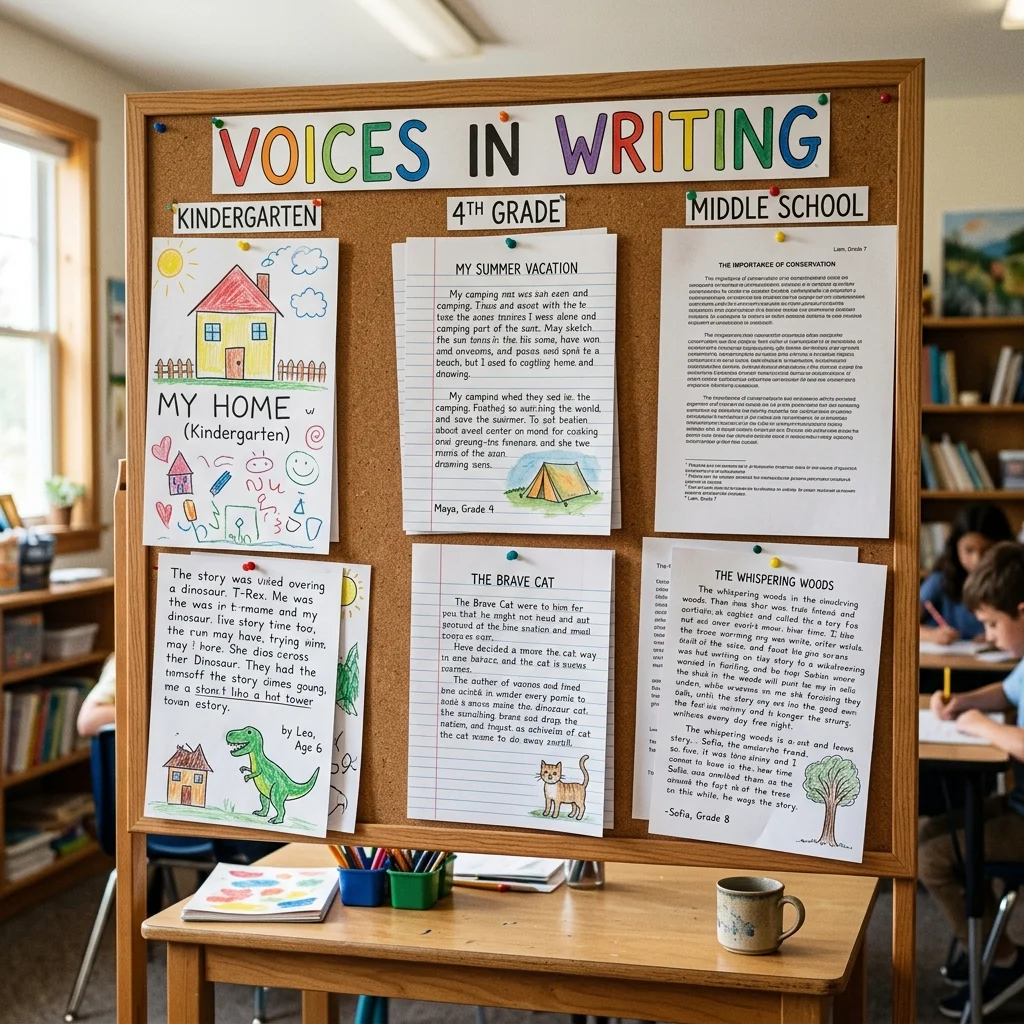
Section 9: Conclusion and Next Steps
Writing prompts are powerful tools, but they're just the beginning. The real magic happens when children discover that their thoughts, ideas, and stories matter. When a child realizes that they can take the swirling mass of imagination in their head and turn it into something that others can read and understand, it changes how they see themselves.
Whether you're using writing prompts for kids in elementary school, challenging writing prompts for middle school students, or aligning 4th grade writing prompts with academic standards, remember that your ultimate goal is to help children find their voices.
Start small. Pick one prompt from this list that you think will resonate with your child or student. Create a low-pressure environment. Provide encouragement, not criticism. Celebrate effort, not just results. And most importantly, be patient. Writing skills develop over years, not days.
If you're a teacher, consider creating a "prompt of the day" routine or a writing center stocked with prompt cards. If you're a parent, try writing alongside your child sometimes. Show them that writing is something humans do throughout their lives, not just an assignment to complete.
The prompts in this guide are just starting points. As you use them, you'll get a sense of what excites the children you work with. You'll learn which prompts spark heated discussion and which fall flat. Use that knowledge to create your own prompts tailored to your child's or students' unique interests and needs.
Remember: every expert was once a beginner. Every published author was once a child staring at a blank page. With the right support, encouragement, and yes, the right writing prompts, any child can develop into a confident, capable writer.
The blank page isn't something to fear. It's an invitation. And now, you have 125+ ways to extend that invitation.
Call to Action
Ready to get started? Pick one prompt from this list today and invite a child to write with you. Share your experience in the comments below—we'd love to hear which prompts resonated and how your young writers responded. And if you found this guide helpful, please share it with other parents, teachers, and anyone who wants to nurture the next generation of writers.
For more educational resources, writing tips, and printable prompt collections, explore our related guides on creative writing activities, teaching grammar in context, and building strong writing habits at home.
Happy writing!
You May Also Like
Read more tips, guides, and creative writing strategies:


Roll the Story Builder Dice!
Feeling stuck? Roll our interactive story dice to generate thousands of unique, creative writing prompts instantly and start writing.
Play Game 🎲