15 Storytelling Techniques for Beginners: A Practical Creative Writing Guide
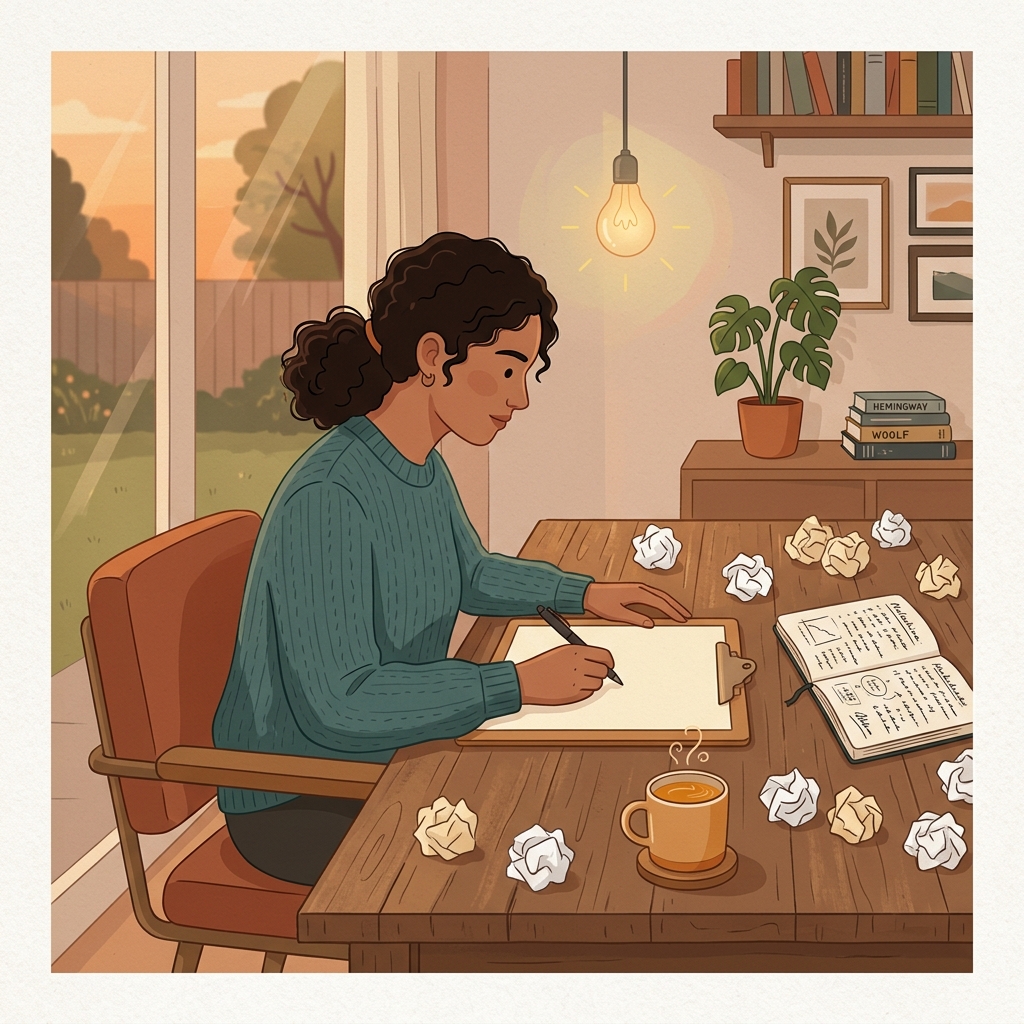
A blank page can feel oddly personal. It sits there, quiet and white, while your mind races through every reason you might get it wrong. Maybe you have an idea but do not know where to begin. Maybe you start a story, write three paragraphs, and lose interest. Maybe your characters feel like cardboard, your endings arrive too fast, or every sentence sounds less exciting on the page than it did in your head.
Here is the good news: those problems do not mean you are not a writer. They mean you are at the beginning of learning a craft.
Good stories are not born perfect. They are built one choice at a time: a character who wants something, a moment that changes, a detail that makes a setting believable, a sentence that makes a reader pause. The writers you admire have made thousands of clumsy first drafts. They got better because they learned to notice what a story needs and because they kept practicing.
This guide gives you 15 practical techniques that can make your stories stronger right away. You do not need special equipment, a dramatic life, or hours of free time. You need curiosity, a little patience, and a willingness to write badly before you write well.
Why beginners struggle with storytelling
Most beginners do not struggle because they lack imagination. They struggle because they try to do everything at once.
They want an original plot, unforgettable characters, beautiful sentences, a surprising twist, and a perfect ending—all in the first draft. That is like learning to cook by attempting a five-course meal before you know how to chop an onion. It creates pressure, and pressure can make writing feel impossible.
Beginners also tend to confuse an idea with a story. “A girl finds a mysterious key” is an idea. A story begins when we know what the girl wants, what the key changes, what could go wrong, and what she is willing to risk.
Another common problem is protecting the first draft too much. New writers often stop every few lines to judge, delete, and rewrite. The result is a polished opening attached to nothing. Drafting and editing are different jobs. First, get the story down. Later, make it better.
Finally, many people wait to feel inspired. Inspiration is wonderful, but it is unreliable. Practice creates more ideas than waiting ever will.
- Begin with a character who wants something
A story moves when someone wants something badly enough to act. The want does not need to be huge. It can be winning a race, finding a lost dog, getting through the first day at a new school, or saying sorry after an argument. What matters is that the character cares.
A character without a goal drifts. A character with a goal gives the reader a reason to turn the page.
Real-world example:
Instead of writing, “Maya walked around town on Saturday,” try this: “Maya had one hour to find the bakery that made her grandmother’s favourite lemon cake before the surprise party began.”
Now there is a goal, a time limit, and a reason the goal matters. We want to know whether Maya succeeds.
Small writing exercise:
Write down three ordinary goals:
- Get a library book back before closing time.
- Keep a secret from a best friend.
- Save enough money to buy a concert ticket.
Choose one. Give the character a reason the goal matters today, not someday. Write 150 words about their first attempt.
Beginner-friendly tip:
When you feel stuck, ask: “What does my character want in this scene?” The answer can be small. Even wanting five quiet minutes alone can create tension if somebody keeps interrupting.
- Put something in the character’s way
Wanting something is not enough. If the character gets it easily, there is no story—only a report.
Obstacles create movement. They force characters to make choices, reveal what they value, and sometimes make mistakes. The obstacle can be another person, a rule, bad weather, lack of time, fear, a misunderstanding, or the character’s own habit of avoiding difficult things.
Real-world example:
Jonah wants to audition for the school play. The problem is not that he cannot sing. The problem is that the audition is on the same afternoon he promised to help his little brother with a science project. Now he has a choice, and either choice costs him something.
Small writing exercise:
Take the goal from Technique 1. List five things that could make it harder. Choose the most interesting one—not necessarily the biggest—and write the scene where the obstacle first appears.
Beginner-friendly tip:
Do not solve problems too quickly. Let your character try one plan, fail or partly fail, and try again. A story becomes more satisfying when success has a price.
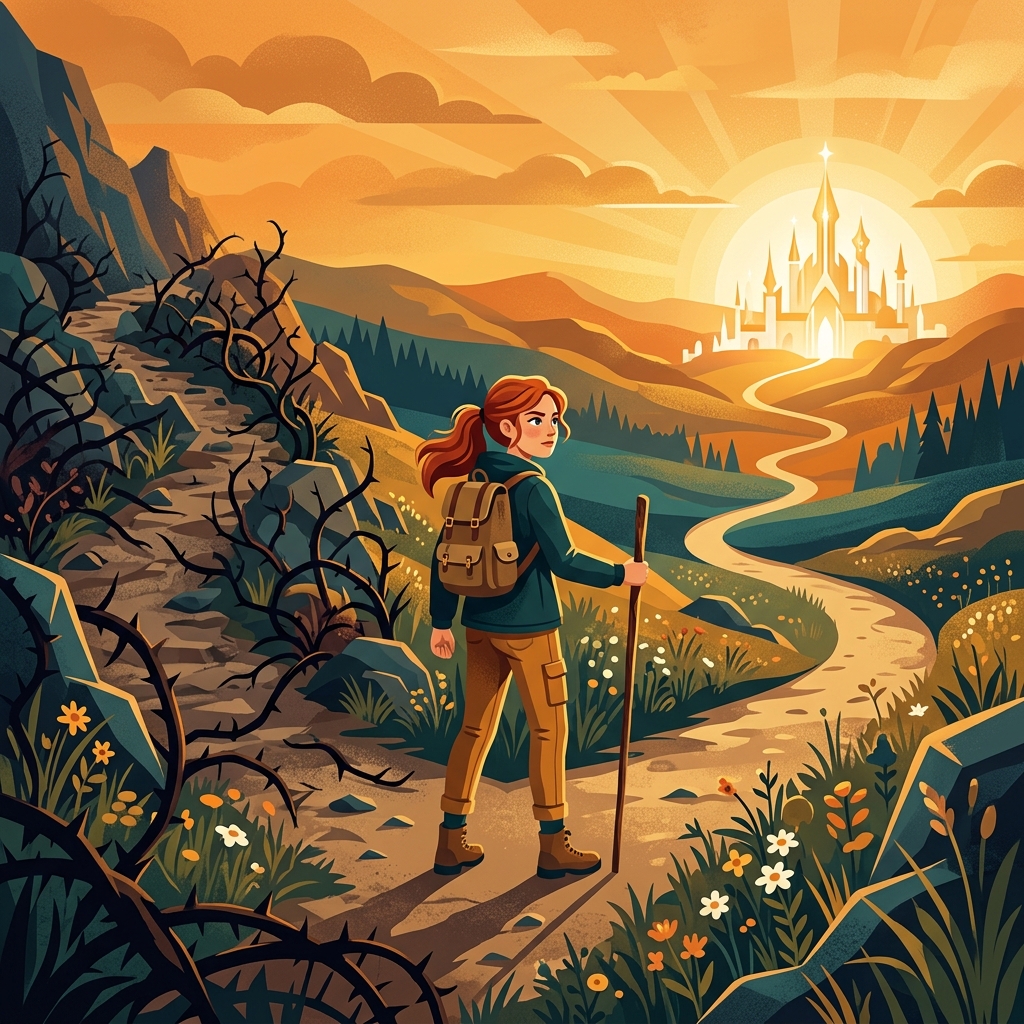
- Start close to the change
Many beginners begin too early. They spend a page describing breakfast, the weather, and a normal school morning before anything happens. Those details can matter later, but the reader needs a reason to care first.
Start near the moment that changes the character’s day. You can always explain the earlier details after the reader is interested.
Real-world example:
Slow opening: “On Monday, Eli woke up at seven. He brushed his teeth, ate cereal, and waited for the bus.”
Stronger opening: “Eli found the note inside his locker ten minutes before the final bell: Do not go home today.”
The second opening creates a question. Who wrote it? Why should Eli not go home? What happens if he does?
Small writing exercise:
Think of a story idea you have. Write the first three possible moments where the story could begin. Choose the latest moment that still makes sense. Write a new opening of 100 to 200 words.
Beginner-friendly tip:
Open with a change, a problem, a surprise, a decision, or a question. You do not need explosions. A quiet line can be powerful if it makes the reader lean closer.
- Make characters feel like people, not labels
A “brave girl,” a “mean teacher,” or a “funny best friend” is a starting point, not a complete person. Real people are full of mixed feelings. A brave person can fear disappointing their family. A kind person can be jealous. A funny friend can go quiet when something hurts.
Give characters a few specific habits, memories, wishes, and contradictions. This is how they become believable.
Real-world example:
Instead of saying, “Mr. Das was strict,” show him lining up the pencils on his desk before every lesson. Then let him quietly keep extra snacks in a drawer for students who miss breakfast. He is still strict, but now he feels human.
Small writing exercise:
Create a character profile using these questions:
- What do they want people to think about them?
- What are they secretly worried about?
- What small object do they keep and why?
- What do they do when nervous?
- What is one thing they are very good at?
Write a scene where the character tries to hide their worry.
Beginner-friendly tip:
Give every important character one unexpected quality. The bully might love old movies. The star athlete might be terrified of dogs. Do not use the detail only to be unusual; use it to show a real person.
- Show feelings through action and detail
You have probably heard the phrase “show, don’t tell.” It can sound confusing, so here is a simpler way to think about it: do not only name an emotion. Let the reader notice it.
Telling has a place. “Nora was nervous” is clear and quick. But showing gives the feeling texture: “Nora folded the bus ticket into a square, then into a smaller square, until the paper tore.”
The best writing often uses both. Tell the reader enough to keep the story clear, then show the important moments with actions, body language, thoughts, and sensory details.
Real-world example:
Telling: “Ben was angry when his friend laughed.”
Showing: “Ben smiled once, too quickly, then shoved his hands into his pockets so nobody would see them shake.”
Small writing exercise:
Write the sentence “I was scared.” Rewrite it three times without using the words scared, afraid, nervous, or worried. Use a physical action, a sound, and a thought in your three versions.
Beginner-friendly tip:
Look at hands, eyes, posture, and what a person does with objects. Feelings often appear there first.

- Use specific details that earn their place
Details make a story vivid, but too many details can slow it down. Choose details that reveal mood, character, place, or change.
A room does not need every piece of furniture listed. One or two meaningful details can do more work than a full inventory.
Real-world example:
“The kitchen was messy” is general.
“Three birthday candles had melted into the countertop beside an unopened apology card” tells us the kitchen is messy, but it also hints at a story.
Small writing exercise:
Describe a bus stop, classroom, bedroom, or kitchen in five sentences. Include only three concrete details. Make each detail tell us something about the person who uses the place.
Beginner-friendly tip:
Use your senses. What does the place smell like? What sound is just beneath the conversation? Is the light harsh, soft, flickering, or fading? One strong sensory detail can bring a setting alive.
- Let dialogue do more than deliver information
Good dialogue is not a transcript of everyday speech. Real conversations are full of “um,” repeated words, and unfinished thoughts. In fiction, dialogue should feel natural while doing useful work.
It can reveal personality, create tension, hide information, show a relationship, or change the direction of a scene. Often, people do not say exactly what they mean. That gap is where interesting dialogue lives.
Real-world example:
“Did you take my notebook?” Lena asked.
“No.” Arjun kept looking at the classroom door.
“Then why are you holding my pen?”
The characters are not explaining everything. Their words and actions create the tension.
Small writing exercise:
Write a short conversation between two people who both want the last slice of pizza. Neither person is allowed to say the words pizza, hungry, or mine. Let the reader understand the problem anyway.
Beginner-friendly tip:
Read dialogue aloud. If you cannot imagine a person saying it, shorten it or make it more direct. Also remember that people speak differently. A shy character may answer in short sentences. A nervous character may talk too much.

- Give every scene a purpose
A scene should change something. The character learns a fact, makes a decision, loses an opportunity, gains a friend, gets into trouble, or sees a situation differently. If nothing changes, the scene may be a summary, a transition, or something you can cut.
Before writing a scene, know three things: what the character wants, what gets in the way, and what is different by the end.
Real-world example:
In a scene at a café, Alia wants her friend to forgive her. Her friend refuses to listen because she thinks Alia lied. By the end, the friend still has not forgiven her, but Alia discovers the lie was spread by someone else. The story has moved.
Small writing exercise:
Write a one-sentence plan for a scene using this pattern: “In this scene, ___ wants ___, but ___ happens, and by the end ___.” Then write 250 words from that plan.
Beginner-friendly tip:
If a scene feels flat, do not immediately add more description. First ask what changes. The answer may show you exactly what the scene is missing.
- Raise the stakes in a believable way
Stakes are what the character could lose if they fail. They do not have to be life-or-death. For a child, losing a friend’s trust can feel enormous. For a teenager, missing one chance to join a team can change the whole year. For an adult, admitting the truth may risk a job, a relationship, or a long-held image of themselves.
The reader needs to understand why this matters to this particular character.
Real-world example:
A student wants to win a writing contest. That is a fine goal. The stakes rise when we learn the prize is a scholarship for a summer programme they cannot otherwise afford—and their late parent used to take them to the library where the contest is held.
Small writing exercise:
Write your character’s goal. Then finish these sentences:
- If they fail, they will lose ___.
- The loss matters because ___.
- The worst thing that could happen is ___.
Use one answer in a scene.
Beginner-friendly tip:
Emotional stakes are often stronger than bigger danger. A reader may care more about a child being brave enough to apologise than about a car chase with no personal reason behind it.
- Use conflict inside the character as well as outside
The strongest stories usually have two battles. There is an outside problem, such as finding a missing pet or winning a debate. There is also an inside problem, such as fear of speaking up, a need to please everyone, or an unwillingness to trust.
The outside plot gives the story action. The inside struggle gives it meaning.
Real-world example:
Mina is trying to save the community garden from being removed. That is the outside conflict. Inside, she hates asking for help because she believes needing people makes her weak. To save the garden, she must learn to organise others and accept support.
Small writing exercise:
Give your main character one goal and one fear. Write a scene where achieving the goal requires them to face that fear.
Beginner-friendly tip:
Do not make the character change completely overnight. Small changes are more believable. They may still be afraid, but they make one braver choice than they would have made at the beginning.
- Control the pace
Pacing is the speed and rhythm of a story. Fast scenes use short sentences, direct actions, and urgent choices. Slow scenes make room for thought, description, memory, and quiet conversation. Good stories use both.
If every scene is fast, the reader gets tired. If every scene is slow, the reader gets restless. Give readers time to breathe after an intense moment, then build the pressure again.
Real-world example:
During a race, you might write: “The rain blurred the track. Sam slipped. Someone passed him.” Short lines create speed.
After the race, you might slow down: “In the empty changing room, Sam untied his shoes one muddy knot at a time. He had not lost because he fell. He had lost because he stopped trying to stand.”
Small writing exercise:
Write a 100-word scene in which a character is late for something important. Then write a 100-word quiet scene in which the same character waits for news. Notice how sentence length changes the feeling.
Beginner-friendly tip:
When you want speed, cut extra explanation. When you want a reader to feel a moment, slow down and choose one or two clear details.

- Build toward a meaningful ending
An ending does not need to be shocking. It needs to feel earned. The best endings grow out of what the character wanted, what they faced, and what they learned or chose.
Avoid solving the biggest problem with an accident, a stranger, or a sudden piece of information that appeared only at the end. Let the main character take part in the solution.
Real-world example:
At the beginning, Tia refuses to enter the water after a childhood accident. By the end, she does not have to become a champion swimmer. A meaningful ending could be Tia stepping into the shallow end to help her younger cousin, because protecting someone matters more than her fear in that moment.
Small writing exercise:
Write the last line of a story before writing the middle. Make it show change rather than simply explain it. For example: “This time, when the phone rang, Omar answered.” Then imagine what had to happen for that line to matter.
Beginner-friendly tip:
Return to something from the opening: an object, a place, a phrase, or a fear. If it has changed meaning by the end, the story can feel complete.
- Revise with a purpose
Revision is not punishment for writing a rough draft. It is where you discover the story you were trying to tell.
Do not try to fix every problem in one pass. Read once for the big picture. Does the main character want something clear? Is there enough conflict? Does the ending connect to the beginning? Then read again for scenes, dialogue, details, and sentences.
Real-world example:
In a first draft, a character may find a lost necklace in chapter two and return it in chapter six. During revision, you notice the necklace never mattered emotionally. You can either cut it or make it important: perhaps it belonged to the character’s estranged aunt, and returning it forces a difficult conversation.
Small writing exercise:
Choose one old paragraph. Revise it in three passes:
- Underline the sentence that matters most.
- Cut one sentence that repeats the same idea.
- Add one detail that reveals character or mood.
Beginner-friendly tip:
Save old drafts before making large changes. Knowing you can go back makes revision less frightening.

- Read like a writer
Reading is one of the quietest ways to improve your writing. When a story moves you, do not only think, “That was good.” Ask why it worked.
Where did the story begin? What did the character want? When did the problem become harder? Which detail made you picture the place? How did the ending echo the beginning?
Read widely: short stories, novels, memoirs, poems, comics, essays, and writing by people whose lives are different from yours. Every form can teach you something about voice, structure, humour, emotion, or rhythm.
Real-world example:
If you read a story that makes a small dinner conversation feel tense, notice what the writer does. Perhaps one character keeps changing the subject. Perhaps the dialogue is short. Perhaps an untouched plate becomes a symbol of what nobody will say.
Small writing exercise:
Choose a page from a book you enjoy. Copy it by hand for practice, not for sharing as your own work. Then write three observations about the writer’s choices: sentence length, dialogue, description, or point of view.
Beginner-friendly tip:
Keep a “craft notebook.” When you find a sentence, scene, or story structure you admire, note what it taught you. Over time, it becomes a personal writing class.
- Finish small things
Finishing teaches skills that starting cannot. A finished 500-word story teaches you about endings, revision, and letting go. Ten unfinished novels may teach you less.
Start with pieces you can complete: a scene, a letter from a character, a story told in one page, or a beginning-middle-end story of 800 words. Finishing builds trust in yourself.
Real-world example:
Instead of beginning an epic series about five kingdoms, write one story about a young messenger who has to deliver a letter across town before sunset. You can still write the larger series later. This small story lets you practice a full arc now.
Small writing exercise:
Set a timer for 30 minutes. Write a complete story that includes a missing object, a decision, and a final change. Do not stop to edit. Give it a title only after you finish.
Beginner-friendly tip:
Done is better than endlessly almost done. A finished imperfect story is a bridge to the next, better story.
Using Writing Prompts to Improve Storytelling
Writing prompts are not a sign that you lack ideas. They are doorways. They give your mind a starting point so you can spend your energy on characters, choices, and scenes rather than wondering what to write about.
For students, writing prompts can make practice feel less frightening because everyone begins with the same small spark and creates something different from it. Creative writing prompts for students are especially useful when they ask for action or change instead of a vague topic.
Try these writing prompts for students:
- A student finds a map drawn inside an old library book, but one location has been crossed out.
- Your main character wakes up able to understand every animal for one day.
- A new student sits in the only empty desk, which has a name carved into it.
- Write about a birthday gift that arrives ten years late.
- A character receives a text from their own phone number.
For writing prompts for high school students, add tougher choices and stronger consequences:
- Your character discovers that the scholarship they want was meant for their best friend.
- A class project forces two former friends to work together after a public argument.
- On the last day of school, a student finds an envelope marked: Open only if you are ready to forgive me.
Funny writing prompts for students and fun writing prompts for students are valuable too. Humour helps writers take risks. It teaches timing, surprise, and character voice.
Try these:
- The school principal is replaced by a very polite robot that takes every rule too literally.
- Your pet starts a social media account and becomes more popular than you.
- A family dinner is interrupted when the potatoes begin giving advice.
January writing prompts for students can turn a quiet new-year week into material for stories:
- It is January 1, and your character finds a list of resolutions written in someone else’s handwriting. One has already come true.
- The first snow day of the year traps three neighbours in a lift with a birthday cake.
- A character decides to try one small new habit for January and accidentally changes a friendship.
The best way to use a prompt is not to force yourself to write a perfect story. Set a short time limit. Write the first obvious idea. Then ask, “What would make this harder, stranger, kinder, or more personal?” That question often leads somewhere interesting.
Using Journal Prompts to Build Creativity
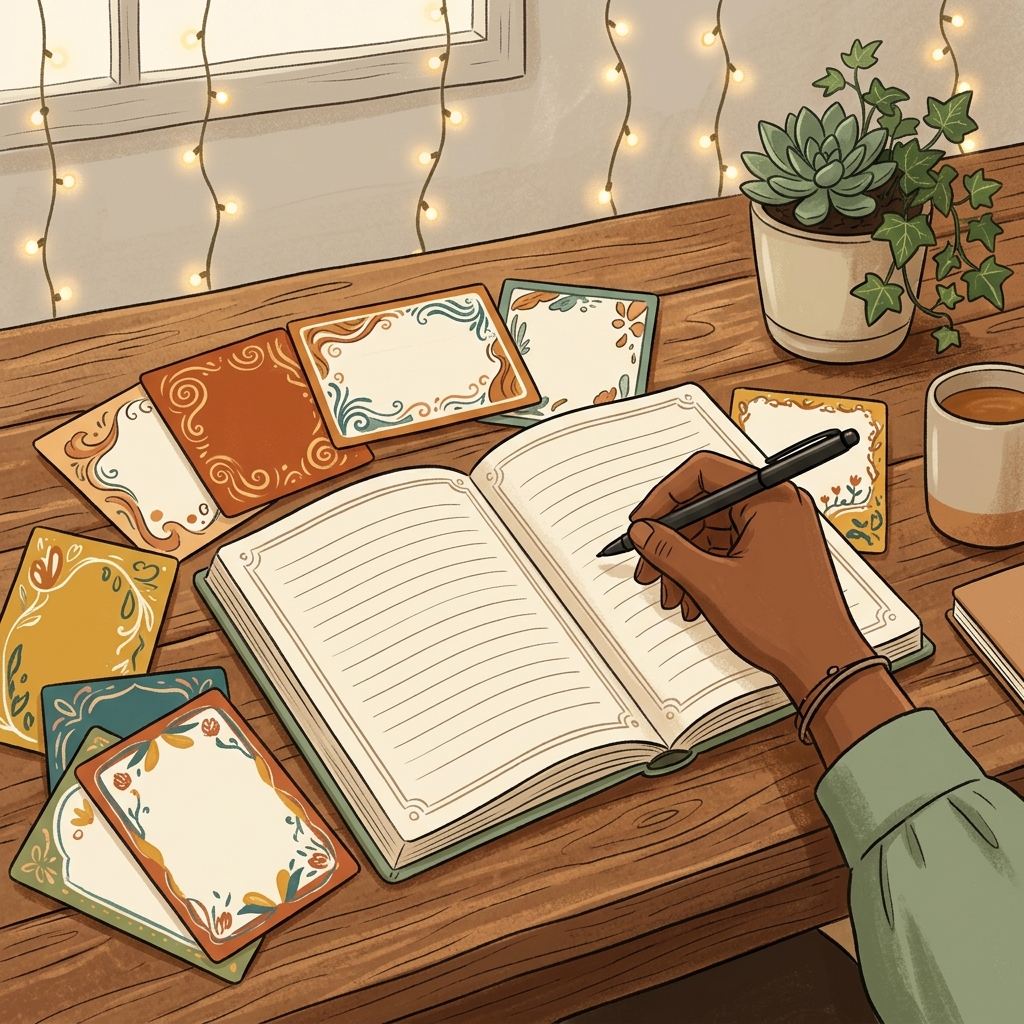
A journal is not only a record of your day. It is a place to notice details, test ideas, work through feelings, and collect material. Writers need a private space where they can write without worrying whether anybody will like it.
Journal prompts for students can build the habit of paying attention. Daily journal prompts can be short enough to fit between school, work, or family responsibilities. You do not need to write pages. Five honest minutes count.
Try these morning journal prompts:
- What is one thing I want to notice today?
- What feeling am I carrying into this morning?
- If today had a weather forecast, what would it be and why?
- What is one small action that would make today easier?
Morning journal prompts work because they help you begin the day with observation rather than rushing straight into worry. Later, those observations can become details in a story.
Reflection journal prompts for students help turn experience into understanding:
- What happened today that I did not expect?
- When did I feel most like myself?
- What would I do differently if I could replay one moment?
- What did I learn about another person today?
These reflection questions are also useful for reflection journal prompts for high school students, who often have more complicated choices, friendships, and pressures to process. Journal prompts for high school students can invite honesty without demanding a perfect answer.
Gratitude writing prompts for students and gratitude journal prompts are another gentle way to build a writer’s eye. Gratitude is not pretending life is easy. It is practicing attention to what is still good, useful, beautiful, or kind.
Try these gratitude journal prompts:
- Describe one person who made your day easier and the exact thing they did.
- Write about a place where you feel safe or calm.
- What ordinary object are you grateful for today? Describe it as if it were precious.
- Recall a small kindness you noticed this week.
Journal prompts for kids should be playful and concrete:
- If your backpack could talk, what would it complain about?
- Draw or describe your dream treehouse.
- What would you do if you could be tiny for an afternoon?
Journal prompts for middle school and middle school journal prompts can explore growing independence and changing friendships:
- Write about a rule you would change and what might happen.
- Describe a time you felt left out. What would have helped?
- If you could give your younger self one piece of advice, what would it be?
Journal prompts for teens can make room for identity and voice:
- What do people often misunderstand about you?
- What does success mean to you when nobody else is watching?
- Write a letter to yourself one year from now.
Fun journal prompts for students and fun journal prompts are perfect for low-energy days:
- Make a list of ten things that would happen in a world run by cats.
- Invent a new holiday and explain its strange traditions.
- Write a review of your day as if it were a film.
Journal prompts for mental health can support self-awareness, but they are not a replacement for professional help when someone is struggling. Keep them gentle. Try: “What would I say to a friend who felt the way I do?” or “What is one small thing within my control today?” If writing brings up feelings that feel too heavy or unsafe, speak to a trusted adult, counsellor, or mental-health professional.
Some people are curious about shadow work journal prompts. These are often used to explore hidden feelings, habits, jealousy, anger, or parts of ourselves we do not like to admit. Use them carefully and kindly. A good place to start is: “What quality in other people irritates me most, and what might that reaction be protecting?” Then stop if it becomes overwhelming. The purpose is understanding, not blaming yourself.
Daily Habits That Make You a Better Writer
You do not need a dramatic routine. You need a repeatable one.
Write a little more often than you write a lot. Ten minutes a day is easier to protect than a perfect three-hour block you never find. Keep a small notebook or phone note for overheard phrases, odd signs, memories, questions, and images. The world gives writers material all day long.
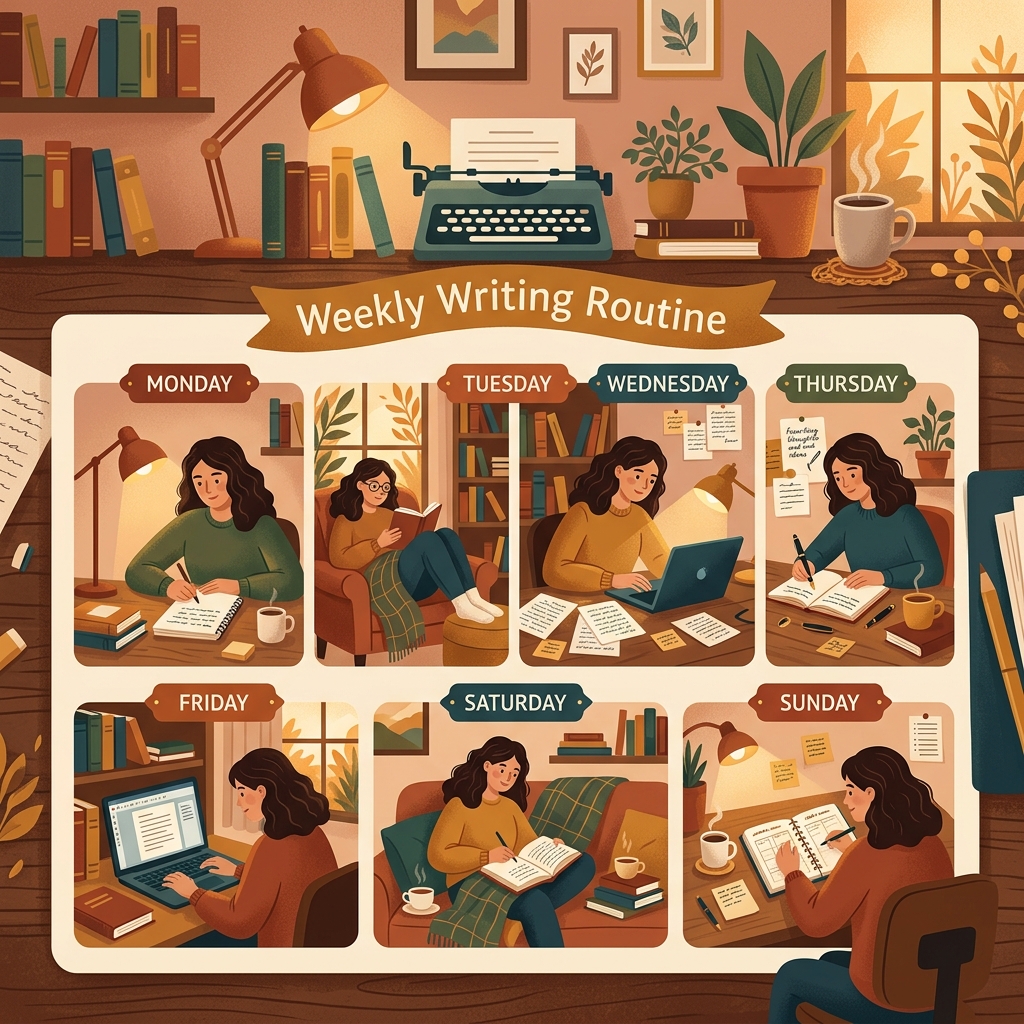
Try a simple weekly rhythm:
- Monday: Write from a prompt for ten minutes.
- Tuesday: Describe a place you visited or remember.
- Wednesday: Write a conversation between two characters.
- Thursday: Read a short story or a chapter and make one craft note.
- Friday: Revise something small.
- Saturday: Write for fun with no goal except curiosity.
- Sunday: Reflect on what you noticed during the week.
Daily writing does not have to be fiction. A journal entry, a letter you never send, a memory, a list of questions, or a paragraph about a bus ride all exercise the same attention you need for stories.
How to Practice Writing Every Day
Make the practice too small to avoid. Tell yourself you only have to write fifty words. Most days, fifty words will lead to more. On hard days, fifty words is still a win.
Choose a reliable cue. Write after breakfast, on the bus, during lunch, after school, or before bed. A cue turns writing from a vague plan into a habit.
Keep a “bad ideas” list. It may contain things like “a ghost who hates scary films” or “a sandwich shop that predicts the future.” Bad ideas are useful because they give you permission to play. Sometimes they become good ideas after a few questions.
You can also use daily journal prompts when fiction feels hard. Describe the last conversation you heard. Write about a smell that reminds you of home. Describe an object in your room as if it belongs to a detective story. Every small piece of writing strengthens your ability to notice and choose words.
Common Storytelling Mistakes Beginners Make
These mistakes are normal. Every writer makes them. The goal is not to be embarrassed by them; it is to learn how to repair them.
Starting with too much background. Begin close to the interesting change. Add background when the reader needs it.
Explaining every feeling. Trust actions, dialogue, and details to do some of the work.
Making every character sound the same. Give people different rhythms, favourite words, fears, and ways of avoiding the truth.
Using a villain who is evil for no reason. Even difficult characters believe they are justified. Understand what they want.
Adding twists without preparing for them. A surprise works best when, afterward, the reader can see the clues.
Trying to sound fancy. Clear language is not simple-minded language. A direct sentence can be beautiful.
Quitting when the middle feels messy. Middles are supposed to be messy. That is where choices become harder.
Editing while drafting every line. Give yourself permission to make a rough draft first.
Copying a favourite writer too closely. Learn from writers you love, but let your own observations and voice enter the work.
How Students Can Improve Their Writing Skills
Students improve fastest when writing becomes regular, low-risk, and specific. Instead of only hearing “make it better,” ask for one focused goal: make the setting clearer, give the character a stronger goal, replace three vague words with specific ones, or make the ending connect to the opening.
Share work with a trusted friend, teacher, or writing group when you are ready. Ask useful questions: Where were you interested? Where were you confused? Which character felt most real? Do not ask only, “Is it good?” Specific feedback helps you revise.
Keep a folder of finished work. It is easy to forget improvement when you only see today’s draft. Reading something from six months ago can show you how much stronger your sentences, scenes, and confidence have become.
Writing also improves when students read beyond what is assigned. Find stories that make you laugh, wonder, or feel understood. The goal is not to copy them. The goal is to notice what they make possible.
How Teachers Can Use Writing Prompts in Class
Teachers can make writing prompts feel welcoming by giving students choices. One student may want to write a mystery, another a realistic scene, another a comic script, and another a journal entry. A shared theme with several prompt options allows different voices to emerge.
A useful class routine is quick writing: offer a prompt, set a timer for five or ten minutes, and tell students that spelling and grammar are not the focus during the first burst. Then invite a few volunteers to share one line they like. This teaches that writing begins with making something, not judging it.
Teachers can use creative writing prompts for students to teach a specific skill. For dialogue, give two characters a secret. For setting, ask students to describe a place during a power cut. For conflict, give a character a goal and one obstacle. For endings, provide the final line and ask students to build toward it.
Reflective writing prompts for students work well after a project, presentation, or group activity. Ask what was difficult, what helped, what surprised them, and what they would change next time. This builds both writing skill and self-awareness.
Fun writing prompts for students can also make reluctant writers feel safe. A funny prompt removes the fear that there is one serious, correct answer. Laughter can be the beginning of confidence.
Can ChatGPT Help You Become a Better Writer?
ChatGPT prompts for students can be useful when treated as a practice tool, not a replacement for thinking and writing. It can help generate a list of story situations, offer a simple outline, explain a writing term, or give feedback questions to consider. For example, a student might ask, “Give me five possible obstacles for a character who wants to save a community garden,” then choose and develop one in their own way.
It can also be helpful for practice exercises. You could ask for a dialogue prompt, a list of sensory details for a rainy train station, or questions to help develop a character. But the important work remains yours: choosing what matters, noticing your own experience, deciding what a character would do, and rewriting until the voice feels true.
Do not paste generated writing into an assignment and call it your own. That prevents you from learning, may break school rules, and leaves your own voice out of the work. If you use any digital tool, be honest about how you used it and follow your teacher’s guidance.
The most useful question is not “Can a tool write this for me?” It is “Can this help me learn what to try next?” A writing life is built from your observations, your questions, your strange little memories, and your willingness to keep going.
Start today. Write one scene about a character who wants something. Give them an obstacle. Let them make a choice. Add one detail only they would notice. You do not need to know the whole story before you begin.
The blank page is not asking you to be perfect. It is asking you to be brave enough to make a first mark. Write the awkward sentence. Write the ordinary moment. Write the scene that makes you curious. Then come back tomorrow and write another.
Stories grow the same way people do: slowly, imperfectly, and with more possibility than you can see at the start.
You May Also Like
Read more tips, guides, and creative writing strategies:

Roll the Story Builder Dice!
Feeling stuck? Roll our interactive story dice to generate thousands of unique, creative writing prompts instantly and start writing.
Play Game 🎲